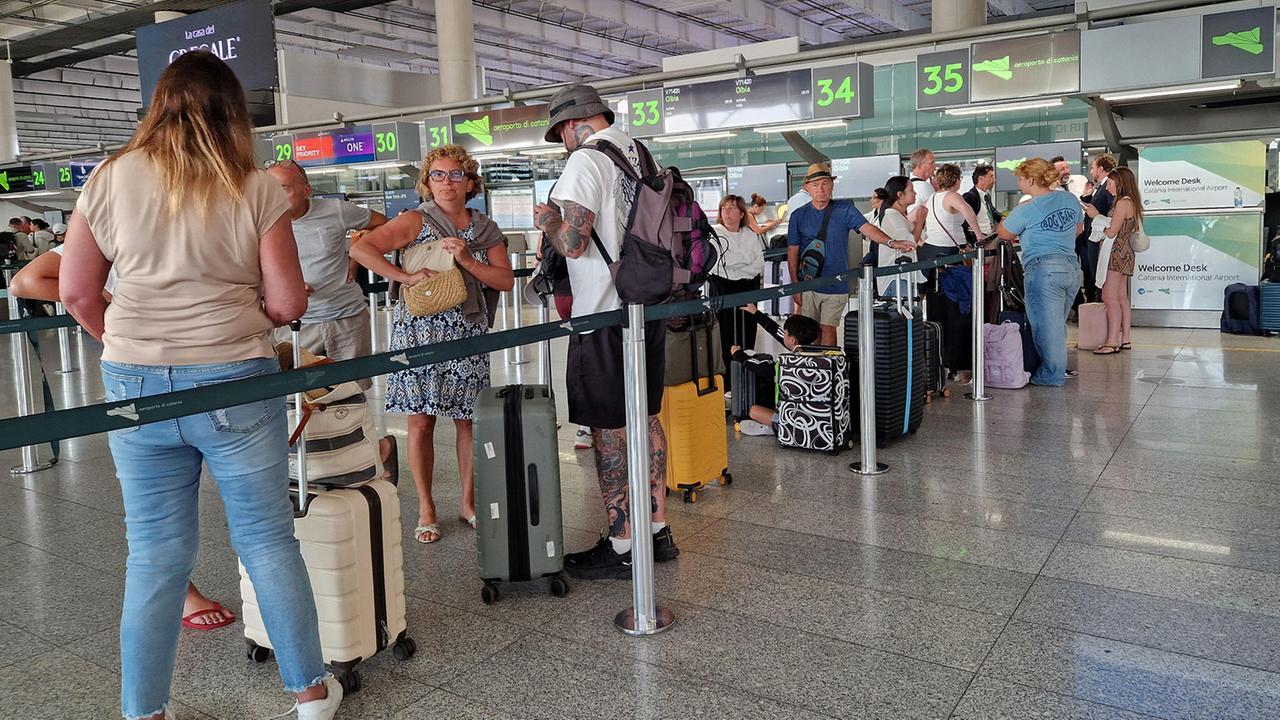
Imagine planning the perfect Mediterranean getaway, only to find yourself sleeping on a hard airport floor, dodging €700 taxi scams, and watching your flight home get canceled because a nearby volcano decided to wake up.
This is the current reality for an estimated 30,000 tourists on the Italian island of Sicily. Mount Etna, Europe’s most active volcano, has entered a state of high-intensity eruption, blanketing the region in thick volcanic ash and completely paralyzing Catania Airport—the primary gateway to the island.
Here is why this natural event has quickly devolved into a systemic travel nightmare, and what it reveals about the fragility of modern tourism hot spots.
The Red Alert: A Runway Covered in Glass and Ash
On Tuesday, aviation authorities elevated the warning level for Catania Airport to Red, signifying that an imminent or ongoing eruption is producing significant ash clouds.
For aviation, volcanic ash isn't just dusty air; it is a catastrophic hazard. Composed of tiny particles of rock, minerals, and volcanic glass, ash can:
- Destroy jet engines by melting inside the combustion chamber.
- Scratch windshields, rendering pilots blind during landing.
- Slick runways, making braking virtually impossible.
To protect aircraft, ground crews have been forced to cover the engines of grounded planes on the tarmac while continuously sweeping the runways. While departures face massive delays and cancellations—with only a single domestic flight managed on Tuesday morning—landings have been completely suspended.
CATANIA AIRPORT STATUS:
----------------------------------
Landings: SUSPENDED (Red Alert)
Departures: Heavily Delayed / Cancelled
Affected Passengers: ~30,000+
Why This Matters: The Perfect Infrastructure Storm
While volcanic eruptions are unpredictable acts of nature, the resulting chaos in Sicily is entirely man-made. This crisis has exposed a fragile infrastructure system unable to handle emergency logistics during peak holiday season.
1. Zero Room at the Inn
Because this eruption struck during mid-August—the absolute peak of the European summer holiday season—hotels, Airbnb rentals, and hostels across Sicily are already booked to 100% capacity. Stranded tourists have nowhere to go, forcing families to sleep on the floors of Catania’s crowded terminals with little to no support from overwhelmed airline staff.
2. The Palermo Transit Trap
With Catania crippled, many travelers are attempting to flee to Sicily's capital, Palermo, to catch alternative flights. However, getting there has become an expensive, exhausting ordeal:
- The Broken Railway: The direct train line connecting Catania and Palermo is currently shut down for scheduled construction work.
- Overcrowded Detours: Alternative train routes via Messina are completely swamped, as are long-distance trains heading toward mainland Rome.
3. Shameless Price-Gouging
Where there is desperation, there are opportunists. Italian actor Filippo Laganà took to Instagram to call out local transport providers who are reportedly exploiting stranded tourists. Private shuttle buses are charging up to €700 for the 200-kilometer drive from Catania to Palermo—a price tag that leaves average travelers entirely stranded.
The Big Picture: A Systemic Tourism Bottleneck
Catania Airport handles over 12 million passengers annually, serving as the lifeblood of Sicily's tourism-driven economy. But as climate volatility and natural events become more frequent, the travel industry is facing a harsh truth: many of the world's most popular destinations lack the resilience to handle sudden disruptions.
When a single volcanic ash cloud can completely isolate an island of five million people, it points to a desperate need for redundant infrastructure—such as high-speed rail networks that don't shut down during peak tourist months.
For now, the 30,000 tourists stuck in Sicily can only watch the smoky peak of Mount Etna, waiting for the wind to shift and the ash to clear.


