Kyiv Erupts: Why Fedorov's Dismissal Rocks Ukraine's War Effort
In a move that has sent shockwaves across Ukraine and its allies, President Volodymyr Zelensky has abruptly dismissed his widely popular Defence Minister, Mykhailo Fedorov. This isn't just another cabinet reshuffle; it’s a seismic event for a nation locked in a brutal war, sparking public outrage, military discontent, and exposing deep strategic rifts at the very top of Ukraine's leadership.
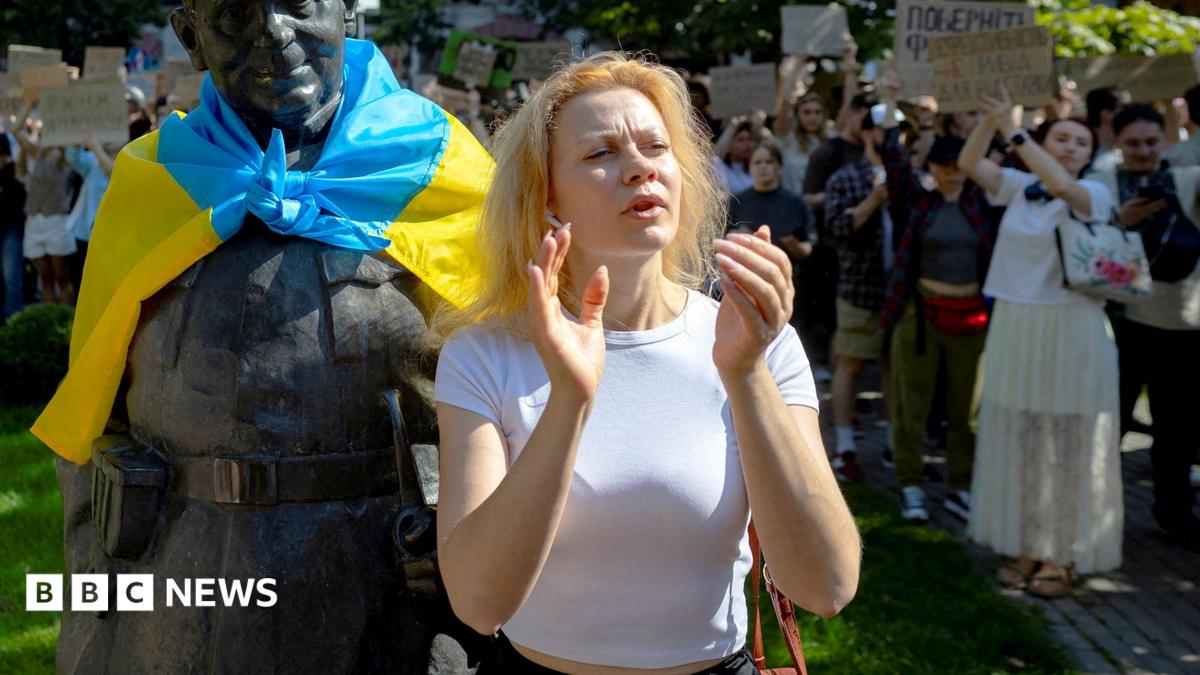
From Kyiv to other major cities, protests have erupted. Young Ukrainians, galvanized by Fedorov's vision, took to the streets holding signs demanding "Hands off Fedorov" and "Stop sabotaging victory!", their chants of "Shame!" echoing the profound confusion and anger felt across civil society and within the armed forces.
The Inner Battle: Unpacking the Zelensky-Fedorov-Syrskyi Conflict
The whispers and rumors that preceded Fedorov's ouster point to a direct, intractable conflict with Commander-in-Chief Oleksandr Syrskyi. Both Fedorov and Zelensky have now all but confirmed the deep-seated tensions.
Fedorov, only appointed in January, revealed he had explicitly suggested to Zelensky that both Syrskyi and Chief of the General Staff Andrii Hnatov should be replaced. "Instead of finding a way of defeating Russia asymmetrically – which is the commander-in-chief's job – he's found a way of splitting our country," Fedorov stated bluntly, referring to Syrskyi.
Zelensky, speaking alongside UK Prime Minister Keir Starmer, acknowledged the "systemic" conflict between the General Staff and the defence ministry, admitting it occurred "at various levels." He indicated that only his personal mediation could make the two leaders work together. Fedorov's response? He tried to learn to work with Syrskyi but found "all the initiatives we proposed were blocked."
Syrskyi, for his part, issued a terse message on Telegram, expressing pride in the 2022 Kyiv defence operation and pledging to "focus on the war and on an effective strategy," while coolly wishing Fedorov "continued success."
Mykhailo Fedorov's Legacy: The Tech Visionary Who Revolutionized Ukrainian Defense
Why the intense backlash over this particular dismissal? Mykhailo Fedorov, at 35, rapidly became a symbol of modern, innovative warfare. He was credited with injecting unprecedented energy into the defence ministry, spearheading an aggressive drive against corruption, and crucially, leveraging data and high-tech solutions to enhance front-line performance.
Before becoming Defence Minister, Fedorov, as Minister of Digital Transformation, was instrumental in setting up the volunteer "IT Army of Ukraine" for cyber-attacks against Russia. He led the hugely successful "Army of Drones" fundraising campaign and even introduced "gamification" to the war, rewarding units for hitting Russian targets.
His focus on drones, cutting-edge procurement, and asymmetric warfare continued in his defence role. He famously appealed to Elon Musk to prevent Russia from using Starlink satellites for drone attacks, a move that significantly disrupted Russian operations. His ministry played a key role in the recent, escalatory attacks on Russian-occupied Crimea.
"This is the worst mistake Zelensky has made during his entire presidency," lamented Oleksandr, a Ukrainian soldier who joined the army because of his trust in Fedorov's vision. "I don't know anyone who supports the decision to replace him. Not within the army, not in society."
The Ripple Effect: Public Outcry and Military Morale Concerns
The protests are not merely symbolic. Maria Lavrynets, 31, at a Kyiv rally, highlighted the tangible impact: "We see [Fedorov's] results. We see the motivation of the soldiers, we should stand for them." This sentiment is echoed by many who fear that the dismissal of a results-driven minister will hurt morale and strategic effectiveness.
The concerns aren't limited to the public. Pavlo Yelizarov, a renowned drone unit commander, resigned from his position as deputy commander of the Ukrainian Air Force in direct protest, calling Fedorov's sacking "a great evil for the country's defence capability." Another former adviser, a tech expert known as "Flash," expressed deep concern, stating he would no longer be able to analyze enemy actions or predict their next steps.
Zelensky, while acknowledging he "hears" society's concerns, appears to be holding firm on his decision regarding Syrskyi, despite Fedorov's revelation that he turned down an offer to stay on as an adviser, stating he acted "according to my conscience."
The president's reshuffle extends beyond Fedorov, with Serhiy Koretsky, the state oil and gas boss, approved as the new prime minister following Yuliia Svyrydenko's resignation earlier this week. However, the proposed replacement for Fedorov, Interior Minister Ihor Klymenko, is still just "one of the names being considered," according to Zelensky, indicating the sensitive nature of the appointment.
What Does This Mean for Ukraine's War Strategy? The Big Picture
At a time when Ukraine needs absolute unity and a clear, innovative strategy to counter Russia's ongoing aggression, this high-profile internal conflict poses significant questions. Is Zelensky sacrificing a popular, effective, and forward-thinking minister to preserve the command structure, or is there a deeper strategy at play?
Fedorov's supporters argue that his emphasis on asymmetry, speed of innovation, and organizational strength is precisely what Ukraine needs to defeat a larger, more entrenched enemy. His removal, they fear, could signify a retreat from this agile, tech-driven approach towards older, more bureaucratic methods.
As Ukraine continues to fight for its very existence, the reverberations of this political earthquake will undoubtedly be felt on the battlefield. The world watches closely to see how Zelensky navigates this deep divide and ensures his nation's war effort remains robust and unified against the formidable challenges ahead.


