UK Measles Scare: Is It a Public Health Crisis or a Political Ploy?
The UK is currently grappling with renewed anxieties over measles, but the narrative emerging from senior political figures — including the Prime Minister and Keir Starmer — is raising more than a few eyebrows. They're not just sounding the alarm on public health; they're explicitly linking the uptick in cases to "vaccine scepticism" and, controversially, to the populist right, specifically Reform UK.
This isn't your typical public health announcement. Why are major political figures weaponizing a health concern, and does the data genuinely back up the sense of looming catastrophe they're promoting?
MMR Vaccination Rates UK: A Look Beyond the Alarm Bells
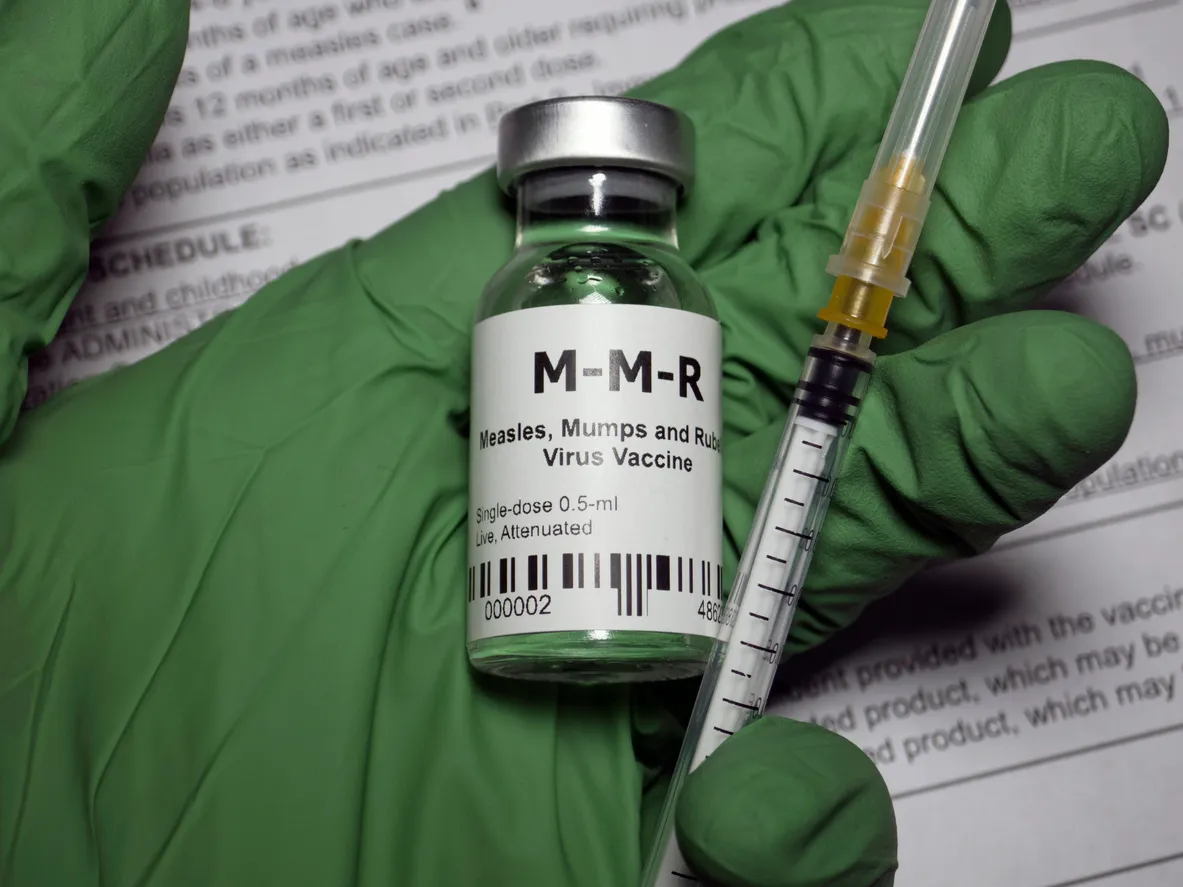
Let's cut through the noise and look at the numbers. The uptake of the Measles, Mumps, and Rubella (MMR) vaccine has indeed dipped slightly in recent years. But calling it a "system in collapse" might be an overstatement.
- Current Coverage: The UK Health Security Agency (UKHSA) reports national coverage at approximately 88.9 percent.
- Peak Performance: This is a step down from the almost 93 percent recorded in 2013-14.
- Historical Context: Crucially, it remains significantly higher than the levels seen in the early 2000s, a period scarred by the now-debunked claims of Andrew Wakefield, which saw vaccination coverage plummet to just under 80 percent in 2003.
Compared to that genuine crisis point, Britain's current vaccination environment appears relatively stable. A slight dip, yes, but hardly a precipitous collapse.
UK Measles Cases 2024-2026: What the Data Actually Shows
The talk of a "surge" in measles might lead you to believe the UK is awash in cases. Let's examine the actual confirmed infections:
- 2024 Peak: Britain did experience a spike, with roughly 2,900 cases recorded.
- 2025 Decline: The following year saw a sharp fall, dropping to fewer than 1,000 confirmed infections.
- 2026 So Far: This year, the total stands at a mere 195 confirmed cases to date. Even if this pace were to continue without seasonal fluctuations (measles cases typically peak early in the year), Britain would end 2026 with an estimated 936 cases nationwide – which is below last year's figure.
While any measles case is a concern, these numbers hardly paint a picture of an uncontrollable, nationwide epidemic.
UK Health Security Agency Measles Models: Scenarios vs. Reality
Much of the alarmist rhetoric seems to stem from a modelling paper by the UKHSA. This report explored hypothetical outbreak scenarios, with the worst-case model suggesting a major outbreak in London could involve between 40,000 and 160,000 infections.
However, it's vital to understand a critical distinction: modelling scenarios are not predictions. The very same document explicitly states that, based on current evidence, the risk of a widespread measles epidemic across Britain is low.
What the modelling does anticipate is something much narrower: localised outbreaks in communities with lower vaccination rates, including some migrant populations and international travellers. Significantly, the report suggests these outbreaks are unlikely to spread widely across the general population.
Politicizing Public Health: The MMR Vaccine and UK Culture Wars
None of this is to say measles should be ignored. Vaccination programmes are crucial and depend on sustained public confidence and high uptake. But this is precisely where the government's current strategy becomes questionable.
By framing a manageable public health issue in overtly partisan terms – specifically by tying it to arguments about Reform UK or the populist right – ministers risk achieving the exact opposite of what they claim to want. Instead of fostering broad public buy-in, they are transforming vaccination from a shared civic responsibility into another contentious battleground in Britain's escalating culture wars.
This is a particularly odd strategy for a government led by Keir Starmer, who came to power promising to lower the political temperature and unite the nation. When public health becomes a political football, the real casualty isn't just a political opponent; it's the very public trust essential for effective health initiatives. In a climate where factual clarity is paramount, injecting partisan venom into a health discussion risks alienating the very people who need to be persuaded.