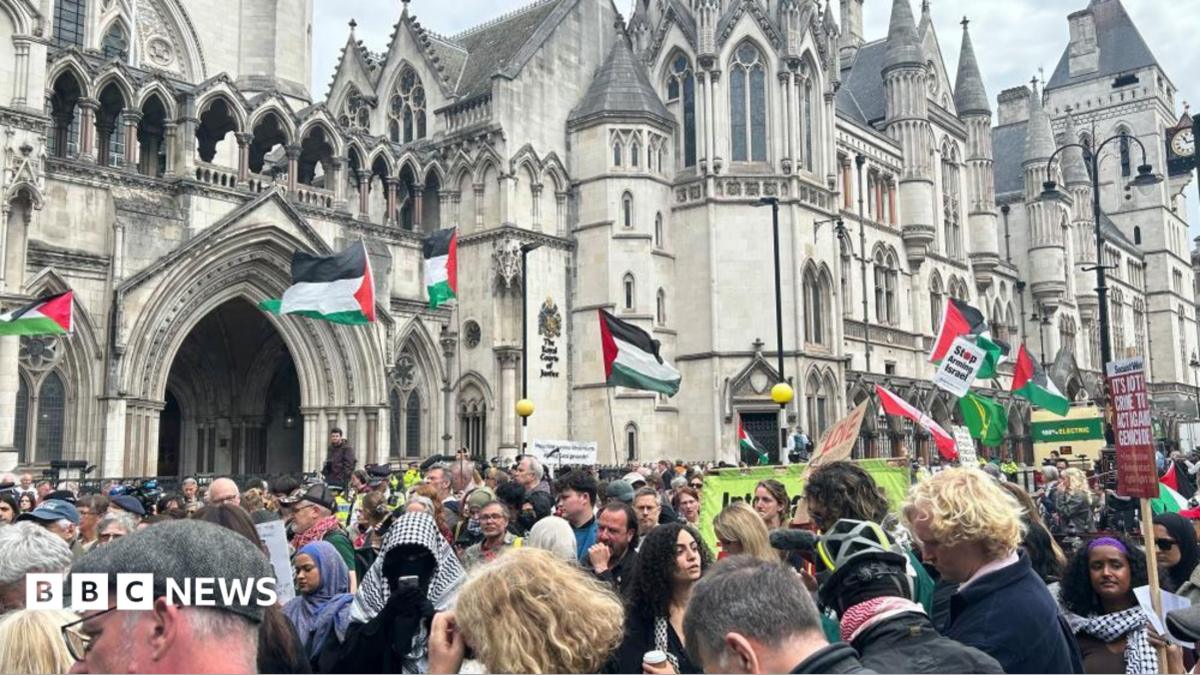
The battle over the UK government’s contentious ban on Palestine Action has reached a new boiling point. In a landmark decision that sends shockwaves through the landscape of free speech and protest, the Court of Appeal has emphatically sided with the government, declaring the proscription of Palestine Action as a terror organisation to be lawful.
This isn't just another legal ruling; it's a seismic shift in how the UK defines and deals with activism that crosses the line into what authorities deem "unlawful violence."
UK Court's Defining Decision: Upholding the Palestine Action Terror Ban
Monday saw a packed Royal Courts of Justice as the nation's five most senior judges delivered a verdict that overturned an earlier High Court decision. That initial ruling had controversially stated the ban breached the right to protest and was incorrectly applied by ministers. But now, the Court of Appeal judges have concluded the proscription was "justified and proportionate."
For the uninitiated, the ban, which came into force last July, makes it a criminal offense to belong to or support Palestine Action, carrying a hefty penalty of up to 14 years in prison. Since then, thousands have been arrested at related demonstrations, including over a hundred outside the Royal Courts of Justice immediately following this week's ruling.
Why the Appeals Court Overturned the High Court Ruling on Protest Rights
The crux of the Court of Appeal's reasoning lies in how it interprets Palestine Action's activities. Lady Chief Justice Baroness Carr, leading the judicial panel, minced no words. While acknowledging the Palestine Action ban as "highly controversial" and supported by "many otherwise lawful citizens," she fundamentally dismissed the notion that the group operates as a legitimate civil disobedience movement akin to the suffragettes.
Baroness Carr stated that Palestine Action "overtly promotes unlawful violence amounting to terrorism." She added: "It is not – as claimed – a direct action civil disobedience protest group like the suffragettes, operating transparently in the open. It is a covert organisation which operates with secret cells to avoid the detection and prosecution of those using violence to destroy property and cause injury."
The court pointed to three specific incidents prior to the ban, which ministers judged to amount to terrorism, and noted the group had neither disowned nor condemned them. This clandestine nature and the targeting of "lawful businesses" – including defence firms vital to UK national defence and aid to Ukraine – were cited as critical factors in the national security law considerations.
Palestine Action Fights Back: A 'Direct Attack' on Free Speech and Assembly
Unsurprisingly, Palestine Action has vowed to fight on. Co-founder Huda Ammori expressed the group's "surprise" at the judgment, especially given the High Court's earlier recognition of "significant interference with the rights to freedom of expression and peaceful assembly."
Ammori declared her intention to appeal the ruling to the UK Supreme Court, though whether the highest court will even hear the case remains uncertain. For Palestine Action, this isn't just a legal setback; it's perceived as one of the "most extreme attacks on free speech and the right to protest in modern British history."
The Dangerous Precedent: How the Palestine Action Proscription Impacts UK Protests
This ruling isn't confined to Palestine Action alone. It sets a dangerous precedent for other protest groups in the UK, potentially blurring the lines between legitimate civil disobedience and activities deemed to promote "unlawful violence." The government’s broad discretion in matters of terrorism definition and national security has been affirmed, raising questions about the future landscape of activism.
Will other groups find themselves under similar scrutiny? How will this impact the strategies of activists challenging government policy or corporate practices? The very act of civil disobedience – often designed to disrupt – now faces a potentially lower bar for being reclassified into criminal activity, particularly if any property damage is involved. This could chill the willingness of individuals to participate in demonstrations, fearing severe legal repercussions.
National Security vs. Freedom to Protest: A Shifting Legal Landscape
The government, predictably, welcomed the ruling. Home Secretary Shabana Mahmood asserted that the ban "does not affect lawful protest in support of the Palestinian cause," but reiterated that Palestine Action's methods were "not consistent with democratic values and the rule of law." She stressed that the group "carried out acts of terrorism, celebrated those who have taken part in those acts and promoted the use of violence," distinguishing them from "an ordinary protest or civil disobedience group."
This judgment underscores a judicial deference to the government on national security matters. The Court of Appeal emphasized that ministers are "generally better placed than the courts in deciding matters of national security" and must have "a wide margin within which to act in this complex field." This broad interpretation of executive power has significant implications for how far the state can go in curtailing perceived threats.
What's Next for Palestine Action's Supreme Court Appeal?
While Palestine Action plans to seek permission to appeal to the Supreme Court, legal experts like barrister Jonathan Metzer note that the Supreme Court doesn't hear every case. The five-judge Court of Appeal, including the Lady Chief Justice, issued a "very detailed judgment," which might lead the Supreme Court to conclude the matters have been "adequately dealt with."
Ultimately, this ruling is a stark reminder of the delicate balance between state security and individual liberties. It forces a national conversation about what constitutes terrorism in the context of protest, and where the lines of permissible dissent are truly drawn in the UK. For activists and civil liberties advocates, the fight for the freedom of expression just got a lot harder.