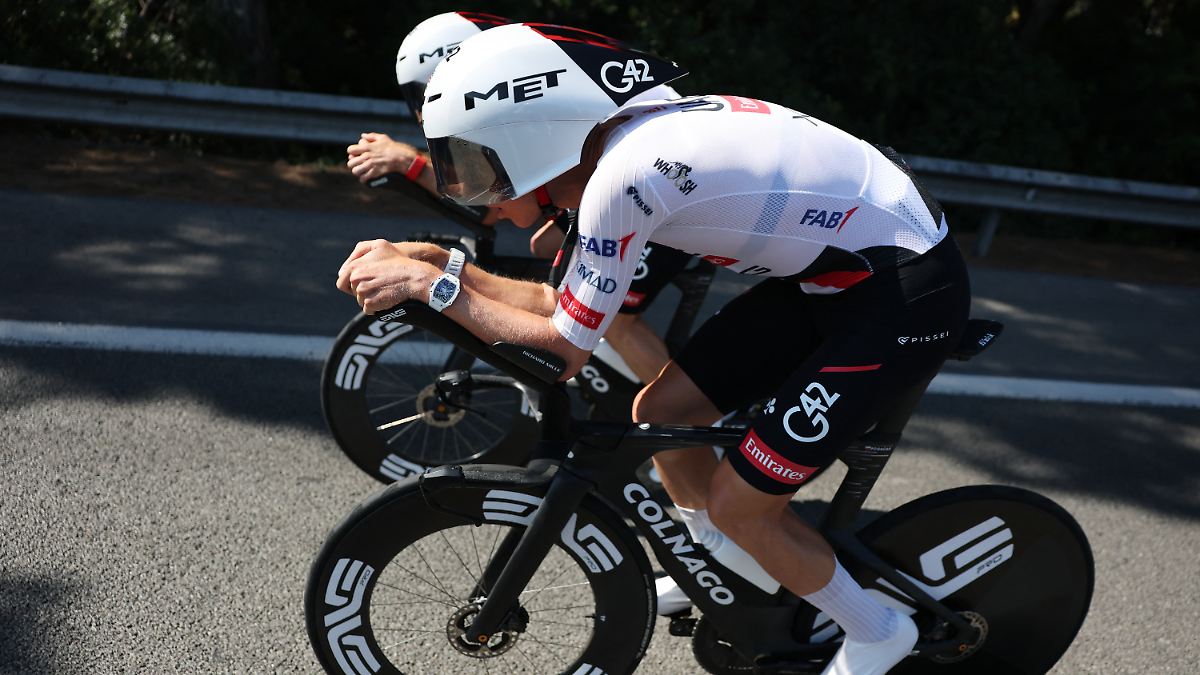
Tour de France 2026 Kicks Off in Barcelona with Revolutionary Team Time Trial
Barcelona isn't just hosting the Grand Depart of the 113th Tour de France; it's also set to witness a seismic shift in how the race begins. Forget your classic flat sprints or individual time trial openers. This Saturday, the world's premier cycling event ignites with a brand-new, high-stakes team time trial (TTT) format, and it's sending strategic ripples through every one of the 23 competing squads.
From Decathlon's young phenom Paul Seixas testing formations on the Formula 1 Circuit de Catalunya to Red Bull-Bora-hansgrohe leaning heavily on tactics guru Dan Bigham, the energy in Barcelona is palpable. The opening stage isn't just a race for the first Yellow Jersey; it's a complex chess match where the rules have fundamentally changed.
How the New Tour de France TTT Format Shakes Up General Classification Hopes
This isn't your daddy's team time trial. The Tour de France 2026 introduces a hybrid model, blurring the lines between individual prowess and collective effort. In the old days, the fourth or fifth rider's time dictated the team's overall standing, with all riders in the group getting that same time for the General Classification (GC). Simple, clear, team-focused.
Now? It's a whole different animal. The fastest rider's time will determine the stage winner and the team's daily standing. But here's the crucial twist: each rider will be individually timed for the overall GC.
Why does this matter? Because it creates a fascinating, potentially agonizing dilemma for every team: Do you sacrifice a potential stage win and the coveted Yellow Jersey to protect your GC contender, ensuring they don't lose precious seconds? Or do you unleash your fastest time trialist, aiming for glory, even if it means others (including your GC leader) might fall behind?
Strategic Chess: Remco Evenepoel and Florian Lipowitz Navigate the Barcelona TTT Challenge
The strategic implications are immense. Take Red Bull-Bora-hansgrohe, for example. They boast Remco Evenepoel, the reigning Belgian Olympic champion and arguably the best time trialist in the world. He's a prime candidate for the stage win and Yellow. But they also have Florian Lipowitz, a strong GC podium contender who might struggle to keep pace with Evenepoel's raw speed over the entire 19.6 km course.
"I find such a time trial cool and much more exciting for the start than a classic flat stage," says Ralph Denk, Team Principal of Red Bull-Bora-hansgrohe. However, he admits, "It means significantly more work for us to prepare. If I had the choice, I would prefer the traditional mode."
Adding another layer of complexity? The course itself. The first 15 kilometers are classic flat time trial territory, perfect for raw power. But then, it switches to an uphill climb, a terrain where Evenepoel might thrive, but others could falter.
Why Prior TTT Experiences Show the Peril of the New Format
This isn't just theoretical. The Tour Auvergne-Rhone-Alpes earlier in June ran under the exact same TTT rules, and the results were telling. Even top teams fractured under the pressure. In only three out of 22 teams—including Red Bull—did the two fastest riders finish simultaneously. Some riders were a minute and a half behind their own teammates. Visma's Wout Van Aert, a world-class talent, lost five minutes over 28 kilometers after losing contact early.
These precedents highlight the razor-thin margins and the potential for early GC dreams to be shattered.
Inside Red Bull-Bora-hansgrohe's Intense Tour de France TTT Preparation
Despite the complexities, teams like Red Bull-Bora-hansgrohe are leaving no stone unturned. Head of Engineering, Dan Bigham, has been meticulously dissecting the Barcelona course since its presentation in October 2025, even conducting full team tests in Mallorca in January.
"The days leading up to it and the actual day itself will be very, very strictly regulated, very well organized, and very well coordinated," Bigham told cyclingmagazine.de. "Which rider do you place at which position? Does the physically strongest man ride behind Evenepoel, or someone who is mentally strong?" These are the granular decisions that could make or break a team's Tour.
Ultimately, while the TTT promises early drama, team principal Ralph Denk keeps a cool head. "The Tour or the podium won't be decided on stage one. We're talking about seconds. And in the last Tour week, we'll be talking about minutes."
Nevertheless, those seconds can accumulate, and a strong start, or a disastrous one, can set the tone for the grueling three weeks ahead. All eyes will be on Barcelona this Saturday to see who masters the new TTT challenge and claims the first coveted Yellow Jersey of the 2026 Tour de France.

