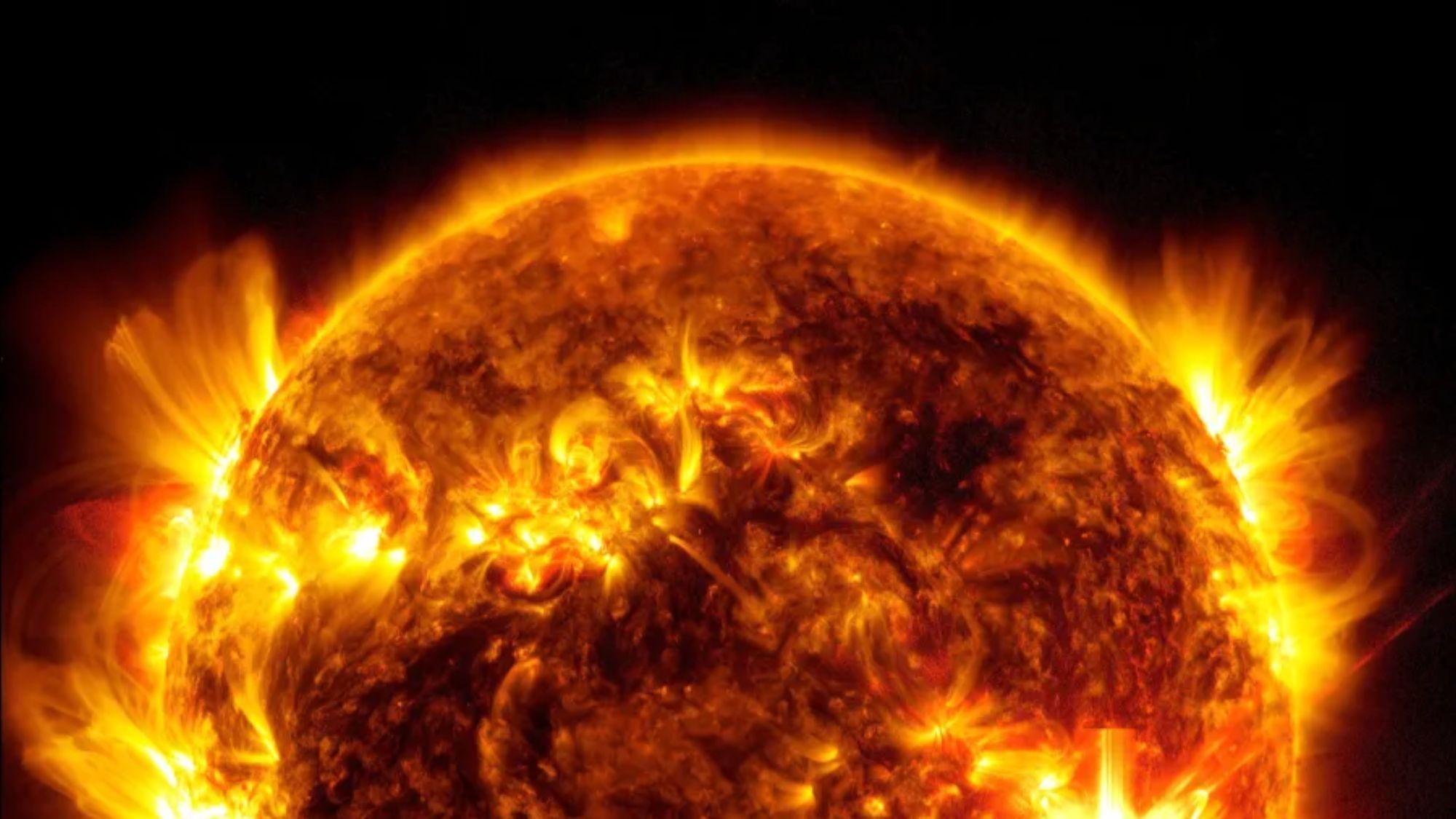
The sun, our life-giver, also packs a cosmic punch. And according to a new, eye-opening study, that punch might be far stronger, and more threatening to our modern, tech-dependent world, than anyone truly realized. Forget just pretty auroras; we're talking about potential widespread disruption to the very infrastructure that runs our lives.
Unmasking the True Power of Solar Storms: Why Previous Estimates Fell Short
For years, scientists believed there was an apparent upper limit to how intensely Earth's magnetic field would respond to the most extreme solar storms. These aren't just your everyday solar flares; we're talking about massive eruptions from the sun, like coronal mass ejections (CMEs), which hurl billions of tons of charged particles directly at our planet. While spectacular auroras are the beautiful side effect, the potential for havoc on satellites, GPS, radio communications, and power grids is very real.
But what if that "upper limit" was a mirage? Researchers now suggest it was an artifact of how we measured solar wind, not a true physical barrier to the sun's fury.
"Our planet's magnetic field does a really great job of protecting us against many space weather effects and so they often just show up as glitches or beautiful aurora," explains Maria Walach, co-author of the study from Lancaster University. "There are however extreme cases." And it's these extreme cases that the new research, published July 15 in the journal Nature, demands we re-evaluate.
The Deceptive "Upper Limit": How We Misread the Sun's Fury
The core of the issue lies in where most extreme solar wind measurements were typically collected. Many observations came from spacecraft positioned near the Sun-Earth Lagrange Point 1 (L1), a million miles upstream from Earth. The problem? The strongest solar wind can weaken slightly on its journey to Earth. This meant that when scientists compared L1 measurements with conditions at our planet, it looked like Earth's upper atmosphere stopped responding to increasingly intense solar wind.
To test this theory, the team took a different approach. They analyzed over a million solar wind measurements from NASA spacecraft orbiting much closer to Earth, directly within our planet's magnetic field. The findings were stark: these observations showed electrical currents flowing through Earth's upper atmosphere continued to increase in direct proportion to stronger solar wind, with absolutely no sign of the previously assumed "upper limit."
This critical distinction suggests that exceptionally powerful solar storms could generate significantly stronger geomagnetic disturbances—and consequently, greater impacts on our vital technology—than current models predict.
History's Warnings: Past Solar Storms and Their Disruptive Legacy on Earth's Infrastructure
This isn't just theoretical musing. History provides chilling examples of what even less extreme storms can do:
- The 1859 Carrington Event: The strongest geomagnetic storm on record, it fried telegraph systems worldwide and painted skies with auroras as far south as the tropics. Imagine that scale of disruption today, with our vastly more complex and interconnected digital infrastructure.
- The 1989 Quebec Blackout: A powerful storm collapsed Quebec's power grid, plunging millions into darkness for hours.
- The 2003 "Halloween Storms": These events disrupted satellites, GPS navigation, and critical radio communications.
While these events were significant, the new study argues they were likely less powerful than the "once-in-a-thousand-year" geomagnetic storms that could now be far more devastating.
Why This Matters Now: Our Vulnerable, Tech-Driven World Needs Better Solar Storm Preparedness
Our modern society is inextricably linked to and utterly dependent on technology. From global communications and financial systems to navigation and weather forecasting, satellites are the backbone. Power grids are the arteries. All are acutely vulnerable to extreme space weather.
The study doesn't predict an imminent, unprecedented solar storm. Instead, it's a vital call to action for scientists and policymakers: we need to fundamentally rethink how we estimate the severity and potential fallout of the rarest, most extreme events. The risks are higher, and our defenses might be weaker, than we presumed.
Riding the Solar Maximum: Current Space Weather Activity and Future Solar Storm Impacts
This research arrives as the sun is nearing the peak of its roughly 11-year solar cycle, known as solar maximum. This period is characterized by increased sunspots, more frequent solar flares, and a higher probability of powerful CMEs.
We've already seen a taste of what the current cycle can bring. In May 2024, the strongest geomagnetic storm in over two decades illuminated skies across vast swathes of the United States and Europe. While mesmerizing, it also caused intermittent disruptions to high-frequency radio communications, GPS-guided equipment, and some satellite operations. This event, however, was still far less powerful than the Carrington Event, let alone the "one-in-a-thousand-year" scenarios the new study highlights.
As Maria Walach aptly notes, "Fortunately, these very extreme cases are rare, but this also means we have limited data to work with and only time will tell what happens at the very extreme one-in-a-thousand-year kind of event."
The takeaway? The sun holds more secrets, and potentially more threats, than we've accounted for. Our ability to predict, mitigate, and protect our technological future from these extreme cosmic events just became a much more urgent and complex challenge.


