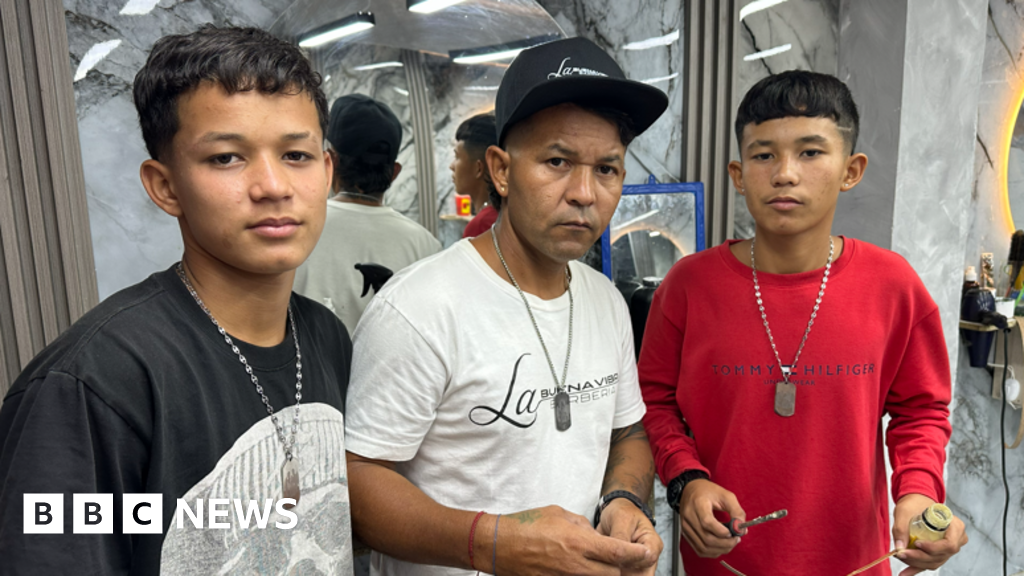
The ground does not just shake beneath your feet—sometimes, it feels like it is actively chasing you. For 15-year-old Deivi Delfín and his 17-year-old brother, Winder, that terrifying metaphor has become an inescapable reality. Having survived a catastrophic natural disaster in their home country of Venezuela, the teenage brothers recently found themselves caught in yet another violent tremor after relocating across the border to Colombia.
It is a trauma that no child should ever have to fathom. "The earthquake is haunting me," Deivi shares, reflecting on a series of events that forced them to grow up overnight.
From a Routine Beach Trip to Unimaginable Loss
Back in late June, the brothers' lives were entirely ordinary. On the evening of June 24, twin earthquakes measuring magnitude 7.2 and 7.5 struck just 39 seconds apart along Venezuela’s Caribbean coastline. Earlier that day, Winder had wanted to bring their 10-year-old brother, Moissés, along to the beach, but he was grounded.
As the teenagers headed home, the violent shaking began. They hugged, shut their eyes, and prayed. When the dust finally settled, their world was gone.
Upon returning home, they discovered their 12-storey apartment building in La Guaira had completely collapsed. Trapped beneath a mountain of concrete were their mother, Yusmani, their grandmother, Carmen, and young Moissés. Official figures state that the initial Venezuelan twin quakes claimed more than 6,300 lives.
Refusing to wait helplessly, Winder and Deivi joined the rescue efforts. Because of their age and size, they were able to squeeze through narrow, hazardous spaces illuminated only by mobile phone flashlights to guide professional rescuers. Through agonizing days of searching, they unearthed fragments of their past—Moissés's shorts, their mother's Bible, and eventually, the heartbreaking discovery of their family members beneath the rubble.
Seeking Safety, Finding History Repeat Itself
Following the tragedy, the brothers moved to Cali, Colombia, to live with their father, Deivid, who was working there at the time. They hoped for a fresh start defined by hard work and education—a way to make their late mother proud.
But just three days after arriving in their new home, the ground began to move once more.
On Monday, Colombia was struck by its strongest earthquake this century—a massive magnitude 7.4 tremor that killed several hundred people across the country, with Cali once again among the hardest-hit areas. As the shaking intensified, Deivi and Winder bolted from their beds, running outside to grab hold of a metal gate as the earth violently churned beneath them.
When their father frantically tracked them down in the chaotic streets, the battle-tested teenagers offered unexpected comfort: "Dad, stay calm. We've been through this before."
A Region in Crisis
As rescue operations and recovery efforts continue across the region, the death toll from the recent Colombian quake has surpassed 5,300, with estimates of the missing soaring as high as 50,000. The compounding disasters have sparked widespread grief and growing public anger toward authorities, leaving communities searching for answers in the wake of unprecedented destruction.
For Deivi and Winder, the road ahead remains long and filled with scars. Yet, their extraordinary resilience stands as a powerful testament to survival against impossible odds, reminding the world of the profound human cost behind the headlines.


