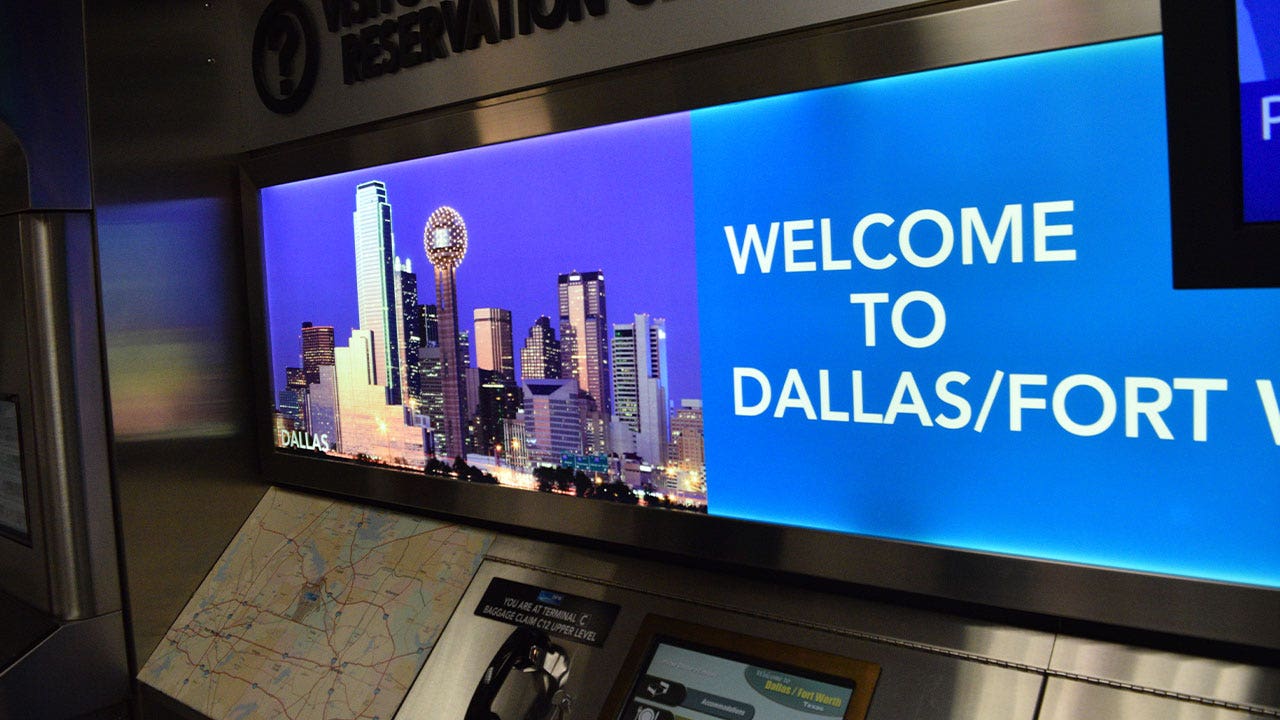
A high-stakes constitutional showdown is brewing in the Lone Star State.
Texas Governor Greg Abbott has launched a sweeping review of state grants directed to two of the nation's busiest transit hubs: Dallas Fort Worth International Airport (DFW) and George Bush Intercontinental Airport (IAH) in Houston.
At the heart of the dispute is a debate over public taxpayer funding, religious accommodation, and constitutional boundaries.
The governor’s aggressive push follows a controversial—and now canceled—proposal to install Islamic wudu (ablution) washing stations inside DFW. Here is a breakdown of what is happening, why the state intervened, and the broader implications for public facilities.
The Spark: DFW's Shelved Washing Stations
The controversy ignited when DFW Airport registered a plan with the Texas Department of Licensing and Regulation to install specialized foot-washing basins, designed for Islamic pre-prayer cleansing, in the pre-security area of Terminal D.
Initial filings listed the project's cost at $300,000, indicating it was "privately funded." However, DFW officials later clarified that those details were the result of administrative errors by an outside design firm.
According to DFW:
- The Actual Cost: The project would have cost roughly $120,000, not $300,000.
- The Funding Source: It was actually intended to be funded by airport-generated revenue (such as parking and concessions), not private donations or direct taxpayer dollars.
Amidst skyrocketing public attention and mounting scrutiny, DFW pivoted quickly. On Friday, airport officials announced they were scrapping the plan entirely, stating the project "would not deliver the originally anticipated operational benefits."
Why Governor Abbott Is Stepping In Anyway
Despite DFW pulling the plug on the proposal, Governor Abbott is not backing down. On Friday, he announced a multi-pronged state and federal offensive against both DFW and Houston's IAH.
"Government-owned airports cannot favor one religion over all others," Abbott posted on X (formerly Twitter). "Texas will not allow illegal religious discrimination at taxpayer-funded facilities."
Abbott’s directive involves three major actions:
- Grant Reviews: The state is reviewing all existing and future state grants to both airport authorities for potential revocation or denial.
- Federal Referrals: Abbott has formally referred both airports to the U.S. Department of Transportation (USDOT) and Secretary Sean Duffy for investigation.
- Targeting Houston: While DFW cancelled its plans, Abbott’s office noted that Houston’s George Bush Intercontinental Airport (IAH) already operates an active ablution station and an adjoining prayer room, putting it directly in the state’s crosshairs.
In a letter to federal transportation officials, Abbott argued that installing facilities tailored to a specific faith amounts to unconstitutional religious favoritism.
The Legal and Operational Gray Area
The clash highlights a complex legal gray area regarding public transit infrastructure.
DFW Airport operates on self-generated revenues rather than direct local tax levies, yet both DFW and IAH are ultimately government-owned properties. Under the Establishment Clause of the U.S. Constitution, government entities are prohibited from establishing or favoring any religion. However, they are also bound by the Free Exercise Clause, which protects citizens' rights to practice their faith.
Many major international hubs—including Chicago O'Hare—currently provide interfaith prayer rooms and low-level washing basins to accommodate global travelers. Proponents of these spaces argue they are standard customer-service accommodations for international travelers.
However, Abbott’s administration maintains that allocating dedicated government resources to facilities designed for one specific religious practice crosses the line into state-sponsored favoritism.
What Happens Next?
With the USDOT now requested to step in, the battle over Texas airport terminals could set a massive legal precedent for how religious accommodations are handled in public transportation hubs nationwide.
If state grants are revoked, both DFW and IAH could face significant financial adjustments, even as they attempt to balance local political pressure against the demands of operating world-class global gateways.