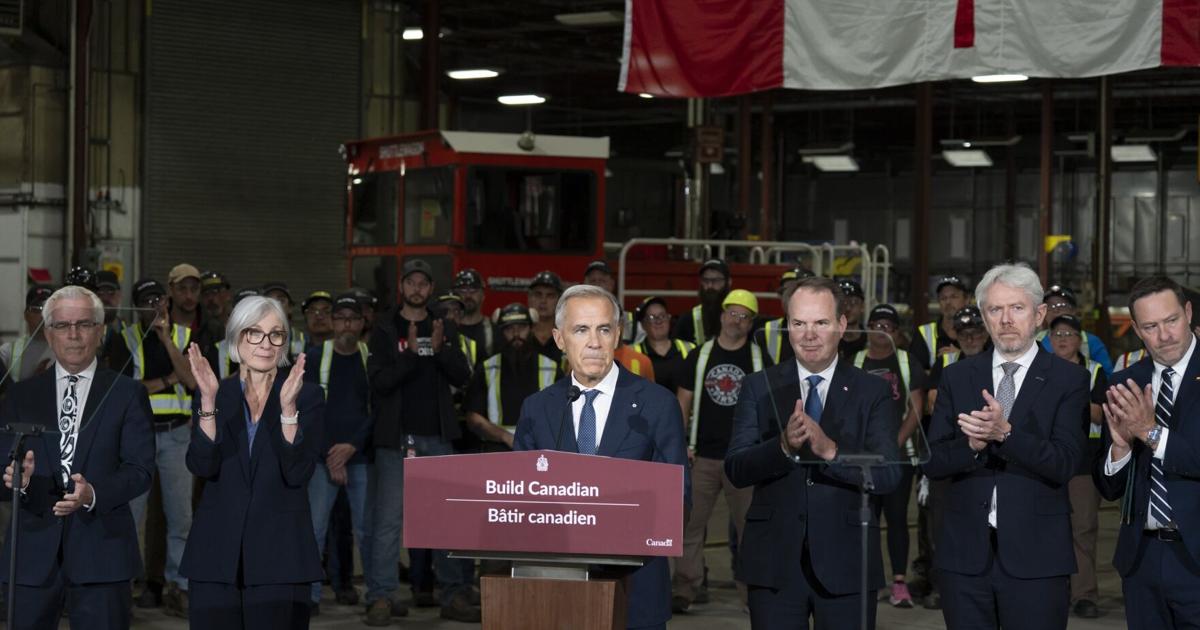
Canada is making a massive $4.7 billion bet on domestic manufacturing, triggering an instant, high-stakes clash between Ottawa and Washington.
Prime Minister Mark Carney announced that the federal government will fund the construction of 313 new passenger train cars for Via Rail. The catch? They will be built entirely in Canada—specifically at the Alstom plant in Thunder Bay, Ontario—bringing passenger rail manufacturing back to Canadian soil for the first time in 40 years.
But behind the transit upgrade lies a much bigger geopolitical story: an escalating trade war with U.S. President Donald Trump.
The Spark: A $4.7 Billion Domestic Pivot
The multi-billion-dollar investment is designed to replace Via Rail’s aging, 50-year-old fleet, much of which was originally built in the United States. By shifting production to Alstom's Thunder Bay facility and Montreal, the government expects to support nearly 700 local jobs and maximize the use of Canadian suppliers for materials like steel.
Carney framed the move as a proactive defense of the national economy rather than waiting on shifting winds from Washington.
"The most important thing we can do is not spend all our time waiting by the phone... refreshing social media to see what’s coming across," Carney stated. "No, it's building. It's building here."
Trump Reacts to the "Enemy" Narrative
The announcement quickly drew a sharp rebuke from Donald Trump. On social media, the U.S. president accused Carney of using him as a political scapegoat. Trump warned that casting him as "the enemy" for political gain would backfire catastrophically if Canada's economy collapses under the weight of tariffs.
This digital sparring matches the high tension at the negotiating table. Trade talks between the two nations fell apart last month, leading the U.S. to slap 50% tariffs on $28 billion worth of Canadian imports. In response, Canada is scheduled to retaliate on September 8 with its own import taxes on over $20 billion of American goods, targeting items ranging from household appliances to paper.
Why This Move Matters
Carney defended his hardline stance, explaining that trade negotiations collapsed because U.S. demands threatened Canadian sovereignty, French-language protections, and third-party trade agreements.
While transit experts note that repatriating train manufacturing may not severely dent the massive American rail industry, it signals a structural shift in Ottawa's economic strategy. Faced with aggressive American protectionism, Canada is leaning heavily into its own "Buy Canadian" policy to fortify local supply chains and keep manufacturing dollars at home.