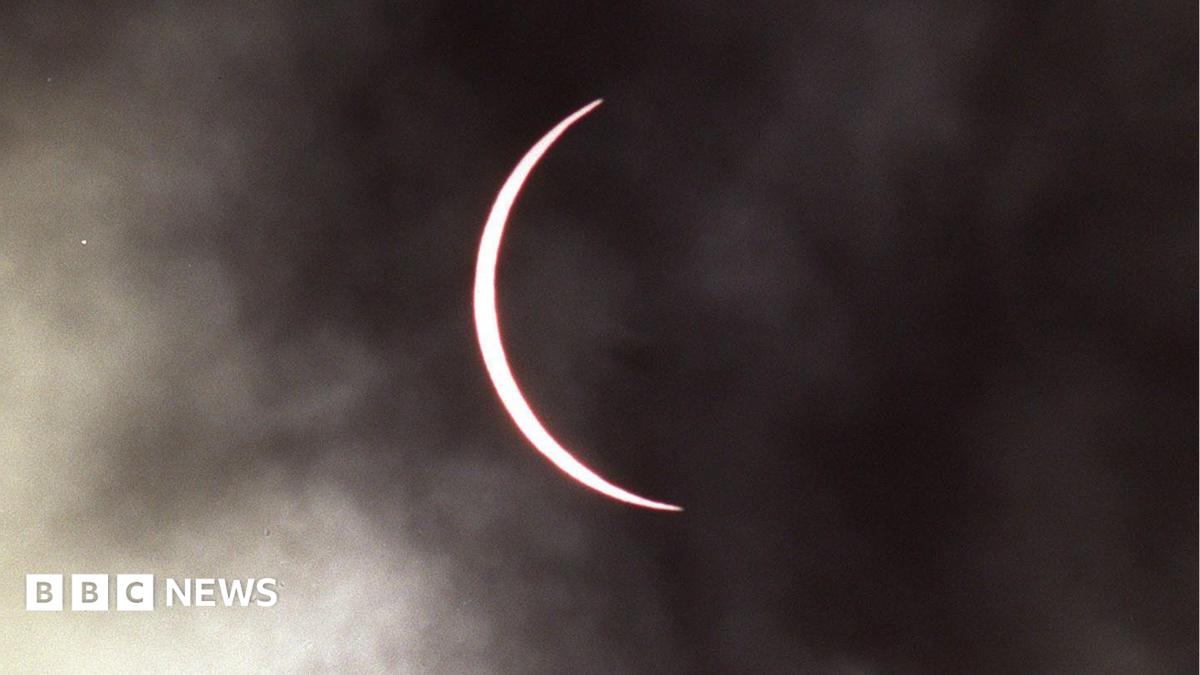
With excitement building over a looming partial solar eclipse across parts of the UK, public attention has taken a nostalgic u-turn. Social media is buzzing with memories of August 11, 1999—the date of the last total solar eclipse of the 20th century.
For a brief, surreal window on that late-summer morning, day became night. While the entire country experienced a dimming of the skies, only Cornwall and the Channel Islands witnessed "totality"—the complete blackout of the sun by the moon.
Here is why that single, fleeting moment still resonates more than two decades later, and why these rare cosmic alignments capture our collective imagination like nothing else.
The Day the Birds Stopped Singing
For those who were in the path of totality, the experience was less about science and more about an almost supernatural shift in reality.
- The Temperature Plunge: In Alderney, where hundreds of astronomers gathered, the temperature plummeted sharply as the moon slid into place.
- The Silent Wildlife: Eyewitnesses describe a bizarre hush falling over the landscape. Birds, thoroughly confused by the sudden darkness, began singing their evening songs and returning to their roosts in the middle of the day.
- The "Grey" Light: This wasn't a standard twilight. Onlookers described the light as a flat, eerie grey that felt entirely alien.
"It was a weird feeling," recalls Barbara Logan, who watched the event near Truro. "You didn't know if it was night-time or daytime."
For others, the sheer scale of the event was overwhelming. Anne Le Cheminant, who watched from Guernsey, describes a feeling of "collective awe" that swept through the crowds as the moon cleared the sun. "I'm still quite emotional about it," she admitted.
Why the 1999 Eclipse Matters Today
In our hyper-connected, digital-first world, we are rarely forced to look up and contemplate our place in the universe. A total solar eclipse does exactly that. It is a equalizer—an event that cannot be paused, scheduled, or bought.
But there is also a biological and historical reason we remain so fascinated by them:
1. A Relic of Ancient Wonder
For thousands of years, eclipses were viewed as omens. While modern science has demystified the alignment of orbital planes, that primal, "supernatural" feeling remains hard-wired into us. When the sun vanishes, our instincts still react with a quiet, ancient fear.
2. The Power of Shared Experience
In an era of highly personalized algorithm feeds, the 1999 eclipse was a truly unified physical experience. Hundreds of people lined beaches and town squares together, looking through cardboard glasses at the exact same miracle.
3. Extreme Rarity
If you missed the 1999 event, you might have to wait a while. According to Royal Museums Greenwich, the UK’s next total solar eclipse won't occur until the year 2090.
What's Next?
While the upcoming celestial event is only a partial eclipse, it serves as a potent reminder of the clockwork universe operating above our heads. It's a invitation to step away from our screens, step outside, and feel—even if just for a few minutes—that same eerie, humbling magic that captivated the world in 1999.