When you think of the global cocoa trade, regions like West Africa, Brazil, or Indonesia probably spring to mind. Berkshire, England? Not so much.
But history has just been made in a British laboratory.
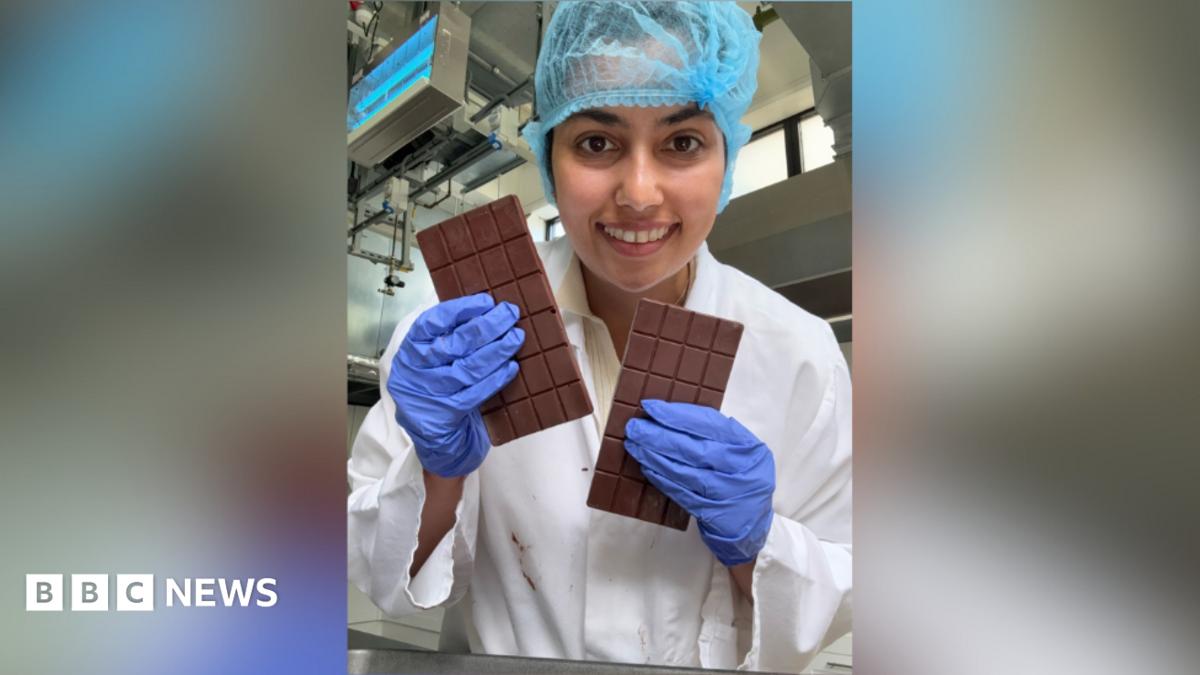
For the first time in nearly a century, researchers have successfully produced a chocolate bar grown, harvested, and manufactured entirely within the United Kingdom. Named the Reading 100 Chocolate Bar to celebrate the University of Reading’s centenary, this sweet creation is the first 100% British-sourced chocolate bar since 1932—when Rowntree’s gifted a six-year-old Princess Elizabeth the only other known UK-grown bar.
While a British chocolate bar sounds like a fun novelty, the science behind it points to a much more urgent global crisis.
From Greenhouse to Gold: How It Was Made
The mastermind behind the bar is Maha Khan, a food security master's student at the University of Reading.
Khan didn't just wrap a locally bought bar; she built this from scratch. The cocoa was harvested from the university’s International Cocoa Quarantine Centre (ICQC), a highly specialized, climate-controlled facility in Berkshire.
The hands-on process involved:
- Harvesting: Extracting the beans and pulp from the pods.
- Fermentation: Letting the beans sit for seven to ten days.
- Sun-Drying: Utilizing a rare British heatwave to naturally dry the beans.
- Processing: Roasting, winnowing, grinding, and blending the cocoa with milk and sugar in the university's state-of-the-art food labs.
Why This Matters: The Threat to Your Chocolate Fix
The UK chocolate industry is a massive £10.4 billion powerhouse, yet it is entirely reliant on international imports.
But our global love affair with chocolate is on thin ice. Climate change, extreme weather, and agricultural pests are threatening equatorial cocoa-growing regions like never before.
"It is incredible that we can make 100% British chocolate," Khan said. "But in the context of climate change, pests, and diseases, there are estimates that 30% to 40% of global cocoa crops are lost annually. These problems are only going to get worse."
Already, consumers are feeling the pinch. Global cocoa shortages have forced major chocolatiers like Lindt to hike retail prices, while other brands resort to "shrinkflation"—making your favorite bars smaller, pricier, and less chocolatey.
The Quarantine Shielding Global Agriculture
This British chocolate bar wasn't grown in Berkshire to jumpstart a domestic cocoa farming industry. Rather, it is a proof-of-concept showing off the critical work of the International Cocoa Quarantine Centre.
The ICQC houses over 300 varieties of cocoa plants. It serves as a vital biological buffer zone, acting as the primary transit hub for 97% of the world's cocoa-growing countries.
Before cocoa plants are shipped across the globe, they are quarantined in Berkshire for two years to ensure they are free of pests and devastating diseases that could wipe out entire regional economies.
The Trade-Off: Local vs. Global
While "eating local" is highly praised for reducing carbon footprints, agricultural experts warn that we cannot simply isolate our food chains.
Prof. Carol Wagstaff, director of AgriFood Futures at the University of Reading, emphasizes that international trade remains a necessity.
"While growing and buying local produce often makes sense for your health, the economy, and the environment, it is not a universal rule," Wagstaff explains. "International trade in food provides economic stability for smallholder farmers who are most exposed to climate risks. We must invest in research to keep these agricultural threats at bay."
The Bottom Line
The Reading 100 bar is a triumph of British agricultural science, but it also serves as a stark wake-up call. If we want to keep enjoying chocolate, our focus must remain on supporting global agricultural technology and protecting vulnerable farmers on the climate frontline.