Why the Iran Conflict Sent Shockwaves Through Global Markets
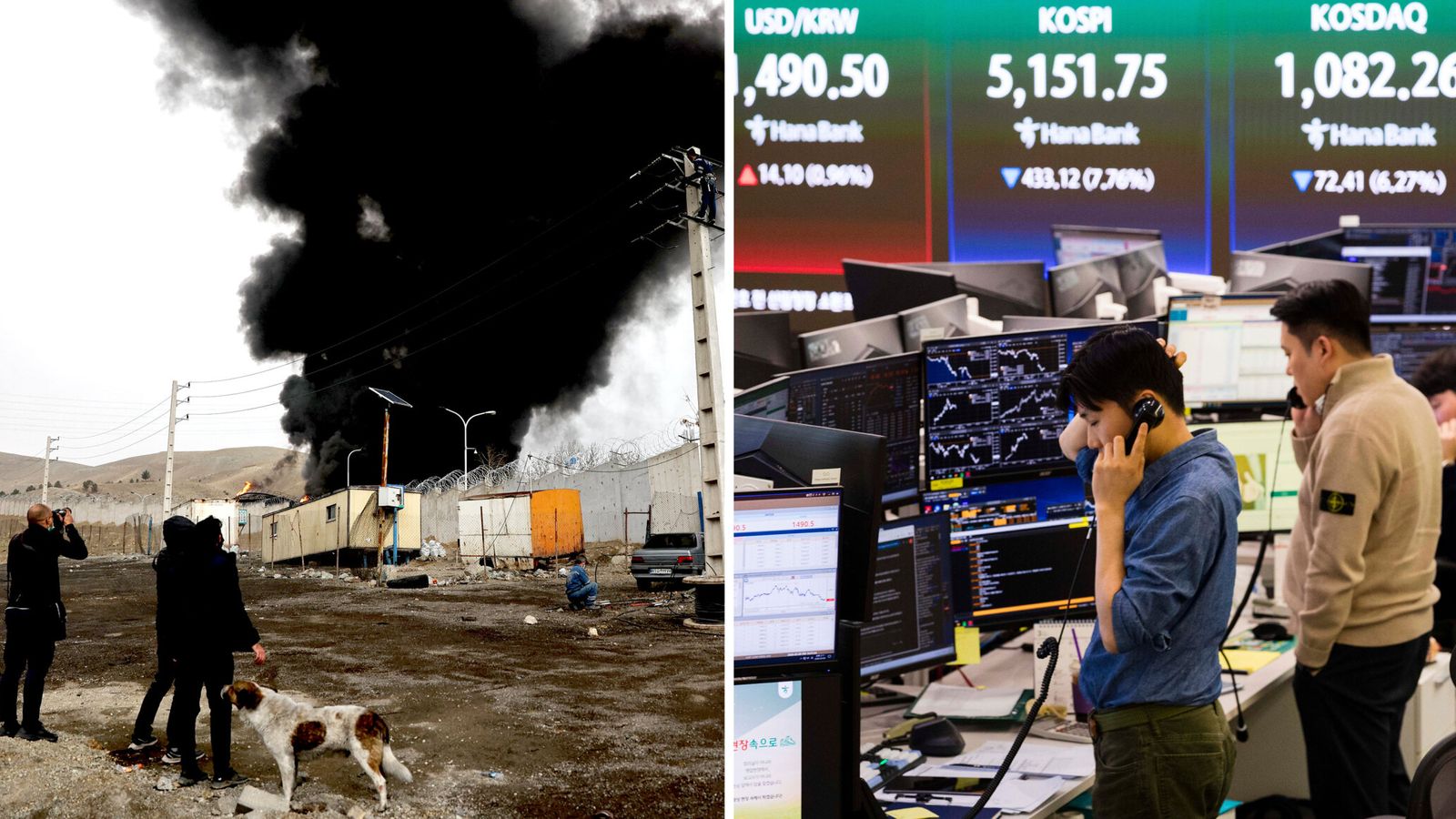
Another day, another geopolitical tremor, and global markets are once again in a dizzying spin. The unfolding conflict in Iran and the wider Middle East has plunged economies into fresh uncertainty, triggering unprecedented oil price swings, scrambling interest rate forecasts, and sending a chill through stock exchanges worldwide. This isn't just about distant headlines; it's about the cost of filling your car, heating your home, and the stability of your investments.
How Oil Prices Exploded (Then Eased) After Iran Conflict News
Monday kicked off with a bang – or rather, a surge – as Brent crude oil, the international benchmark, clocked its biggest single-day gain in six years, rocketing over 20%. Imagine the panic. But just as quickly, the market whiplash began. Later in the day, the price eased significantly, dipping below $100 a barrel before settling around $98.12. While a slight reprieve, this figure remains a staggering 81% higher than pre-conflict levels, indicating a new, elevated baseline for energy costs.
The Strait of Hormuz: A Bottleneck for Global Oil Supply
The core of this energy anxiety lies in the Strait of Hormuz. This critical maritime choke point, through which approximately 20% of the world's oil shipments pass, is now largely impassable for tankers laden with crude. Analytical agency Kpler reports Middle Eastern exports are down to a third of normal levels, with over $200 million worth of oil stranded. This blockage forces producers to consider cuts or even well shutdowns, underscoring the precariousness of the global oil supply chain. Even if the strait reopens, it could take weeks to normalize shipping.
FTSE 100 and European Markets Face the Brunt of Uncertainty
While US stocks managed an unlikely rally by day's end, their European and Asian counterparts weren't so lucky. Benchmark indexes across Europe were awash in red. Prague's SE PX and Stockholm's OMX 30 saw the sharpest declines, each shedding 1.5%.
Closer to home, the FTSE 100, London's index of the UK's 100 most valuable companies, initially plummeted by 1.7% at the open. However, it managed to claw back some ground, finishing the day with a more contained loss of 0.34%. Delving deeper, it was consumer-facing businesses like JD Sports and Burberry, alongside major housebuilders Persimmon and Barratt Redrow, that saw the steepest falls. This signals investor concern over consumer confidence and discretionary spending as the cost of living bites.
The Diverging Fortunes of US vs. European Stocks
The stark contrast between US and European market performance highlights a crucial divergence. US indexes like the S&P 500 (+0.8%), NASDAQ (+1.3%), and Dow Jones Industrial Average (+0.5%) all closed higher. This rebound was largely attributed to former President Donald Trump's declaration that the Iran conflict was "very complete" and "ahead of schedule" – a statement that seemingly calmed investor nerves, at least stateside.
Interest Rate Hikes on the Horizon: Why Your Mortgage Might Be Next
Just a week ago, the Bank of England was widely expected to cut interest rates soon. Now, the market outlook has flipped on its head. With a "Ukraine war-style inflation spike" potentially re-emerging, economists are bracing for a possible rate hike. This abrupt shift is already impacting real-world finances; those looking to remortgage are seeing less favorable rates. Even as UK borrowing costs (for 10-year government loans) eased slightly today, they remain elevated compared to recent months.
Geopolitical Chess: Putin's Play and Energy Security
Adding another layer of complexity, Russian President Vladimir Putin has seized the moment to claim the world is in an energy crisis. He offered to resume "non-politicised" long-term oil supplies to European buyers, conveniently ignoring the fact that the EU and UK significantly cut Russian fossil fuel imports (by nearly 90% since 2021) following the invasion of Ukraine. Putin also urged Russian companies to capitalize on the Middle East conflict, even while acknowledging the price spike might be temporary. It's a clear attempt to reassert Russia's energy leverage on the global stage.
The Bottom Line for Your Wallet: Why This Buzz Matters
So, why does all this matter to you? The answer is simple: the reverberations from the Iran conflict are set to hit your household budget directly.
- Higher Airfares: Expect to pay more for travel as fuel costs for airlines surge.
- Energy Bill Shock: Predictions already point to a potential 10% hike in energy price caps this summer. While UK wholesale gas prices dipped slightly today, they remain at historically high levels.
- Borrowing Costs: The prospect of rising interest rates means mortgages and other loans could become more expensive.
This turbulent period underscores the interconnectedness of geopolitics and everyday economics. While market volatility is nothing new, the scale and speed of these shifts demand attention. The road ahead looks anything but smooth, and consumers and investors alike need to buckle up for continued uncertainty.

/https://i.s3.glbimg.com/v1/AUTH_59edd422c0c84a879bd37670ae4f538a/internal_photos/bs/2026/q/z/pWlBVeQ0aoLbUSYY4Egw/montagem-horizontal-1200px-16-.jpg)
