World Cup Offside Controversy: What Sparked Gary Neville's Outrage?
The World Cup promised us cutting-edge technology, crystal-clear decisions, and a new era of transparency in football. Then came Saturday's Group B clash between Switzerland and Qatar in Santa Clara, delivering a 1-1 draw and a hefty dose of controversy that has fans, pundits, and former players like Gary Neville questioning everything. At the heart of the storm? A dubious penalty decision and FIFA's bizarrely delayed, incomplete explanation.
The Switzerland vs. Qatar Penalty Incident: Was It Offside?
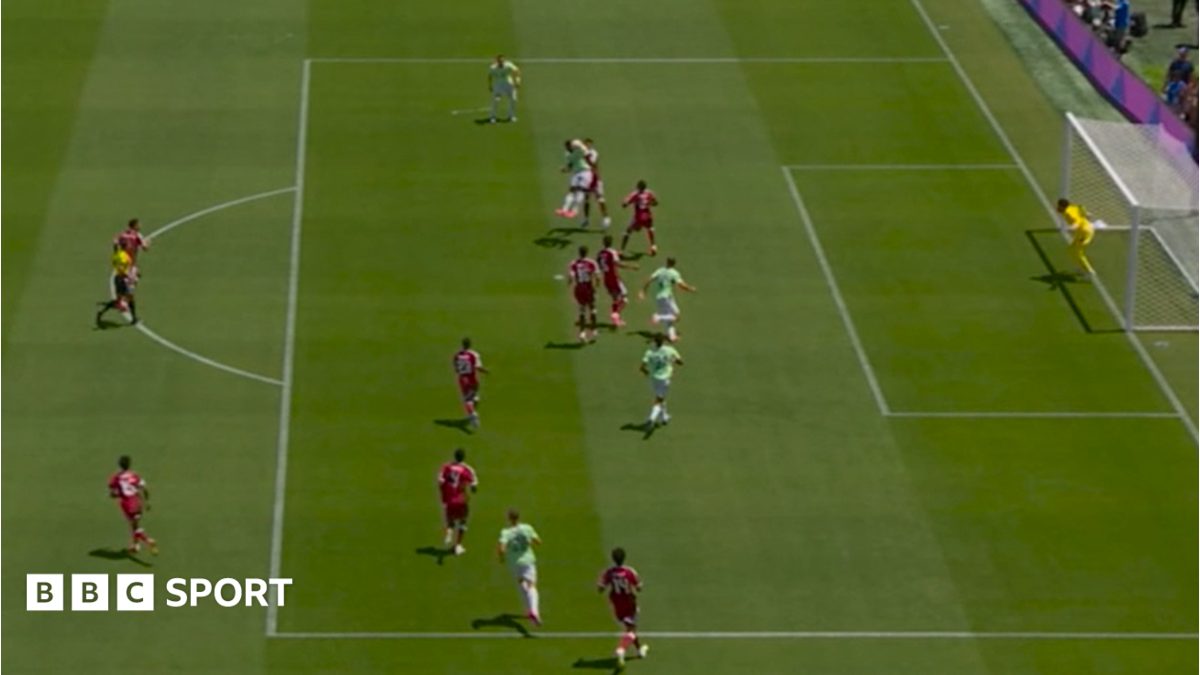
The moment of contention arrived when Switzerland's Remo Freuler was brought down in the box by Qatar goalkeeper Mahmoud Abunada, leading to a penalty expertly converted by Breel Embolo. The goal equalized the score, but the burning question immediately arose: was there an offside in the build-up? Specifically, before Freuler was fouled, or perhaps earlier with Embolo himself?
For many, the replays looked suspicious. But we live in an age of semi-automated offside technology, designed to give definitive answers. So, where was it?
FIFA's Semi-Automated Offside System: A Promise Unfulfilled in a Crucial Moment
Ahead of the tournament, FIFA made a big song and dance about its enhanced semi-automated offside system. Remember the hype? Players scanned, unique lifelike avatars generated, promising the most accurate, visual illustration of offside decisions ever seen. This wasn't just about getting it right; it was about showing the world it was right, instantly.
Yet, when it mattered most in the Switzerland-Qatar game, the system failed. FIFA later attributed it to "a brief technical outage" preventing the onside animation graphic from being generated. Instead of the promised avatars, fans got nothing for hours, then two rather unconvincing static images supposedly proving no offside, released a staggering four and a half hours after the incident.
The Cost of Delay: How FIFA's Silence Fuels Conspiracy Theories
Delay kills trust. In an era where information spreads at light speed, a near five-hour silence from football's governing body regarding a pivotal on-field decision is more than just an inconvenience; it's a credibility vacuum.
"If there is one thing that is guaranteed to create doubt it is delay," the article's original analysis noted, a sentiment echoed across social media. "It creates a vacuum that feeds conspiracy theories. It might give the impression Fifa is hiding something."
And when doubt creeps in, trust walks out.
Gary Neville's Scathing Critique: Why He Called FIFA a 'Dictatorship'
Enter Gary Neville. The former Manchester United captain and respected pundit, speaking on ITV before FIFA’s belated statement and images were released, pulled no punches. His frustration, shared by countless viewers, was palpable.
"We all think [it was offside]," Neville declared. "Everybody at home thinks it. Fifa are the host broadcaster and they have the semi-automatic decision that they can show us. There is a massive question over that because it is offside in my eyes until they prove to me different."
His outrage escalated sharply once the flimsy "proof" finally surfaced. Neville slammed FIFA’s handling of the situation as akin to a "dictatorship," demanding immediate transparency. "The idea that they hold this evidence internally and don't show fans of countries who are playing in tournaments is absolutely ridiculous," he fumed. "To not show the evidence of an offside – prove to us that it's offside! Show it straight away. Why not have transparency?"
Inconsistency in Offside Technology: Why FIFA's Explanations Fall Short
Neville’s criticism wasn’t just about the delay, but the glaring inconsistency. Throughout the tournament, the semi-automated offside system has generally been quick and decisive. We've seen the avatar animations, even for non-VAR calls or clearly onside goals, displayed almost immediately. From Tani Oluwaseyi's offside flag against Bosnia-Herzegovina to Ismael Saibari's goal for Morocco, FIFA has shown it can deliver swift visual evidence.
The official explanation—a "brief technical outage"—doesn't quite align with the capability demonstrated in other matches. This particular incident, a tight one under the 10cm threshold for an automatic audio alert to the assistant referee, was precisely where the enhanced visual proof was most needed. Its absence, and the subsequent weak justification, only deepens the mistrust.
The Broader Impact: What Does This FIFA Controversy Mean for Football's Future?
This incident is more than just one contentious penalty. It strikes at the heart of football's relationship with technology and its fans. If FIFA promises groundbreaking accuracy and transparency, it must deliver, especially on the biggest stage. When the tech fails, and the explanations are delayed and unconvincing, it undermines confidence in the entire system.
Gary Neville's "dictatorship" comment, while strong, encapsulates the feeling of many fans: that vital information is being withheld, that decisions are being made without accountability. In an era demanding greater openness, FIFA's actions here appear to be a step backward. The beautiful game needs its governing body to be not just efficient, but transparent, or risk alienating the very supporters who make the World Cup the spectacle it is.