Pre-season is usually a time for experimentation, but at Borussia Dortmund, a tactical shift is sounding major alarm bells.
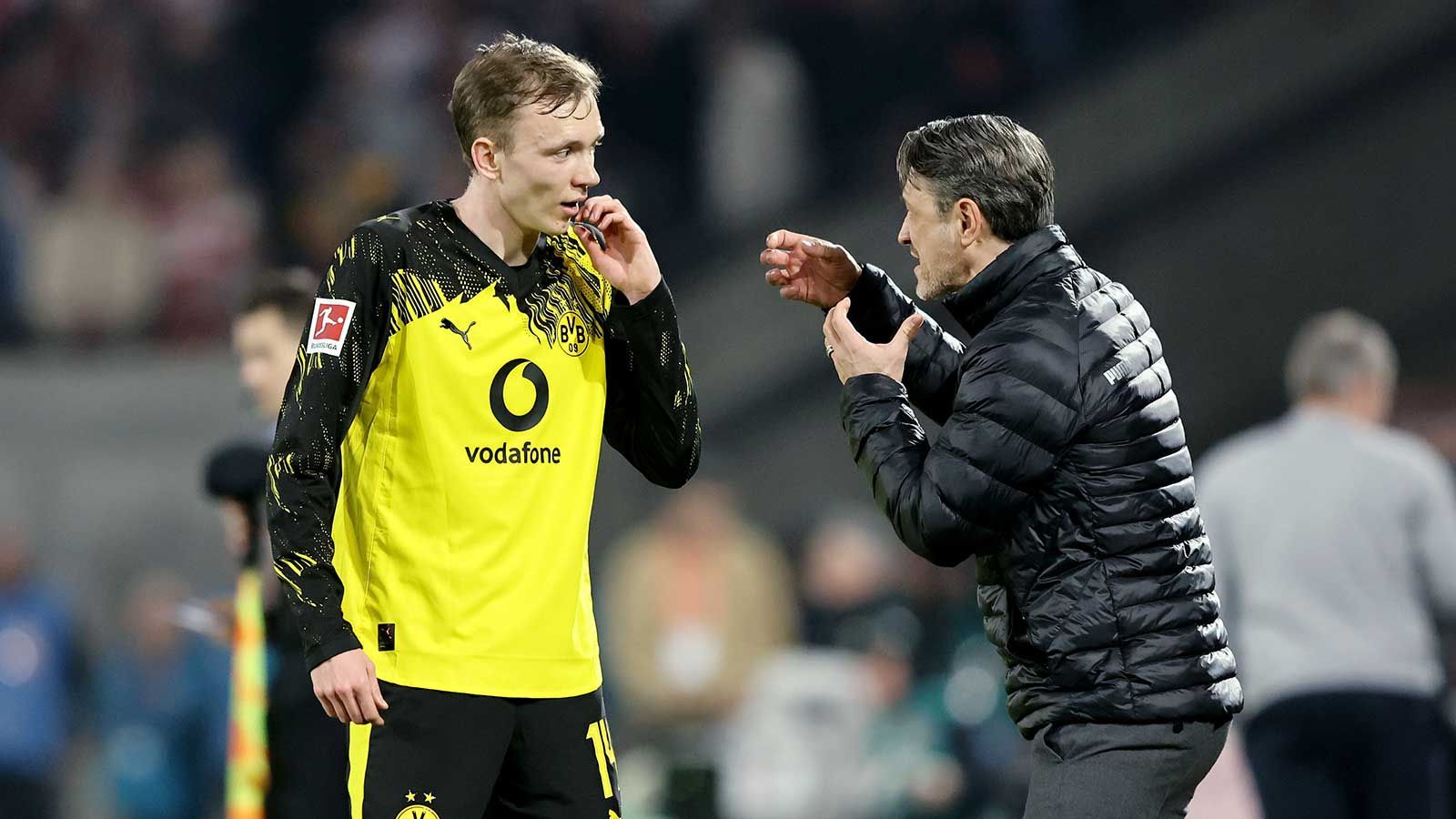
BVB head coach Niko Kovač has a plan for 23-year-old German international Maximilian Beier. The twist? It doesn't involve him scoring goals up front. Instead, Kovač is transforming one of Germany’s most exciting young attacking threats into a wing-back (Schienenspieler).
If this feels like tactical déjà vu, that’s because it is. Kovač is dusting off a controversial playbook from his Bayern Munich days—and it could systematically destroy Beier's greatest strengths.
The Experiment: From Goalscorer to Defensive Shield
During Dortmund's pre-season clashes against FC Tokyo and Arsenal, Kovač’s vision became crystal clear. Beier was deployed on the flank, tasked with dropping deep to form a five-man defensive line when out of possession.
On paper, Kovač’s logic makes sense to a defensively-minded coach:
- Elite Work Rate: Beier possesses an incredible engine and runs tirelessly in both directions.
- Tactical Flexibility: He is a self-sacrificing team player who openly states he will play wherever he is needed.
- Versatility: He can physically handle the transitions.
"Maxi is a player who puts his own ego in the background," Kovač recently told reporters, praising the forward’s work ethic. But while Beier's willingness to suffer for the team is admirable, his new role is a tactical straitjacket.
Why the Wing-Back Role Suffocates Beier
Maximilian Beier is not a wing-back. He is an instinctual attacker whose natural habitat is the penalty box. When Kovač asked his players to write their preferred positions on a slip of paper at the start of his tenure, Beier wrote one thing: The Number 10.
Beier's Optimal Role: Second Striker / Shadow Striker (Behind Serhou Guirassy)
Beier's Kovač Role: Low-Block Wing-Back (Left or Right Flank)
By forcing Beier to start his runs from a deep defensive position, Kovač is neutralizing his best weapons:
- Distance from Goal: Beier is simply too far away from the opponent's box to threaten. His dynamic, vertical bursts into space are wasted in his own half.
- Missing Wing Attributes: Beier is not a traditional touchline hugger. He does not excel in isolated 1v1 dribbling situations on the wing, nor does he possess the deep crossing ability of a natural wing-back.
- Defensive Deficits: While diligent, Beier lacks the positional awareness and defensive instinct required to anchor a back-five. He is an attacker trying to learn a defender's art on the fly.
When played on the wing, Beier naturally cuts inside to find the center. It’s an unconscious magnetic pull toward his true home: the penalty area.
The Ghost of Thomas Müller
For Bundesliga historians, this scenario is terrifyingly familiar.
During his turbulent reign at Bayern Munich, Kovač famously tried a similar tactical adjustment with German legend Thomas Müller. Müller—football’s quintessential Raumdeuter (space interpreter)—was stripped of his free-roaming central role behind the striker and shoved onto the right wing in a rigid 4-3-3 system.
The results were disastrous:
- Müller’s lack of pure wing pace made him ineffective out wide.
- His output plummeted, leading Kovač to bench him and infamously label him a mere "emergency backup" (Notnagel).
- The tactical mismatch fractured the relationship between player and coach, ultimately contributing to Kovač’s exit from Munich.
Like Müller, Beier’s superpower is his cognitive reading of the game. He senses open spaces, times his runs perfectly, and coordinates the high press. Forcing him into a rigid defensive wing-back system doesn't just limit his output—it actively works against his footballing IQ.
The Bottom Line: System Over Instinct
Niko Kovač is a coach who prioritizes structural discipline above all else. But there is a fine line between tactical structure and systemic stubbornness.
By sacrificing Maximilian Beier’s attacking instincts to satisfy his own defensive anxieties, Kovač is playing a dangerous game. Beier will continue to run, defend, and sacrifice himself for the black-and-yellow shirt because that is his character.
But if Borussia Dortmund wants to unlock a generational talent, they need him hunting for goals in the box—not chasing opposing wingers deep in his own half. History has already shown us how this story ends. The question is: will Kovač realize it before it’s too late?

