Middle East Powder Keg: Trump's Claims, Oil Price Swings, and Global Recession Fears
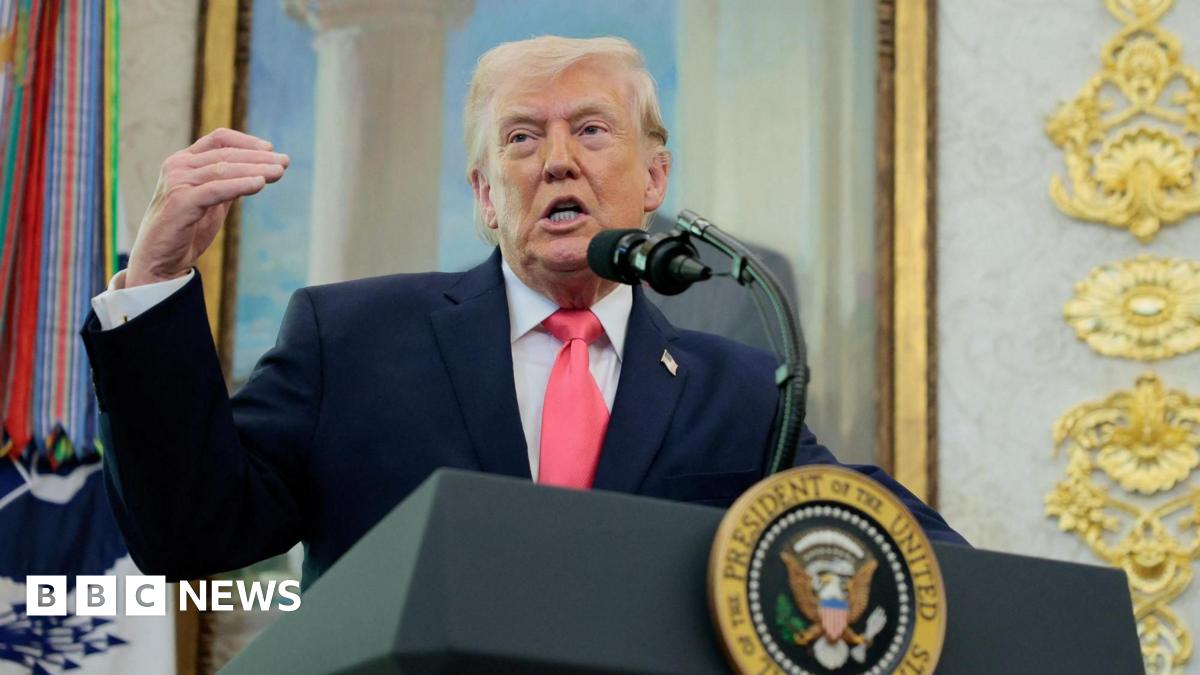
The Middle East is a geopolitical tinderbox, and the world is watching, breath held. While President Donald Trump declared that negotiations to end the Iran war are happening "now" and that Tehran "wants to make a deal so badly," the reality on the ground, and in the financial markets, tells a far more complex and dangerous story. Oil prices, initially dipping after Trump's comments, remain dangerously high, fueling fears of a global recession. This isn't just a regional conflict; it's a rapidly unfolding crisis with seismic implications for every corner of the planet.
The Truth About Iran-US Negotiations: Diplomatic Chaos or Breakthrough?
Trump's optimistic pronouncements were swiftly met with outright denials from Iranian officials, who labelled claims of talks as "fake news." This stark contradiction highlights a profound communication breakdown, or perhaps a deliberate tactic, in a conflict with no clear end in sight.
Despite Tehran's public stance, reports from US and Israeli media, citing unnamed sources, suggest a 15-point plan for ending the war has indeed been handed to Iran via Pakistan. This alleged document reportedly outlines demands for a free maritime zone in the Strait of Hormuz and offers the tantalizing prospect of sanctions removal for Iran. Yet, with no official confirmation and continued hostilities, the pathway to de-escalation remains obscured by a fog of war and conflicting narratives. Several nations, including Pakistan, Turkey, and Egypt, are reportedly attempting to mediate, with even Vice-President JD Vance, a vocal opponent of protracted wars, potentially joining negotiations – a move some analysts interpret as a shift in US strategy.
Escalation on the Ground: Israeli Strikes, Iran's Retaliation, and Nuclear Security Risks
While diplomatic efforts flounder, military actions are intensifying across the region.
Civilian Casualties and Infrastructural Damage: The Human Cost of Conflict
Lebanon continues to bear a heavy civilian toll. Israeli strikes have targeted the southern Sidon area, reportedly killing at least six people, including four in Adloun and two in a Mieh Mieh refugee camp apartment. Beirut itself has seen further devastation, with photos showing plumes of smoke and vast piles of rubble following Israeli offensives against Hezbollah infrastructure. The Lebanese health ministry reports a further 33 deaths in the past 24 hours, bringing the total casualties to over 1,000 since the conflict began. Israel's military has even attributed a ballistic missile that fell in Beirut to the "Iranian terror regime," further cementing Iran's perceived role in regional destabilization.
The conflict isn't one-sided. Israel's Iron Dome defense systems have been actively intercepting Iranian missiles fired towards the country. In one incident, a strike in the central city of Bnei Brak, on the outskirts of Tel Aviv, injured nine people, including six children. Kuwait International Airport also reported a drone strike, leading to a fire but no casualties – a disturbing expansion of the conflict's reach.
Nuclear Facilities Under Fire: IAEA Warns Against Dangerous Escalation
Perhaps most alarmingly, Iran's Bushehr Nuclear Power Plant has been hit by projectiles twice in recent days. While Iran claims no damage or casualties, the International Atomic Energy Agency (IAEA) chief Rafael Grossi has reiterated calls for "maximum restraint to avoid nuclear safety risks during conflict." Targeting a nuclear facility, peaceful or not, introduces a terrifying new dimension to the conflict, risking "dangerous and irreparable consequences" for regional and global security.
Strait of Hormuz: Why This Vital Waterway is Fueling Geopolitical Tensions
At the heart of the global economic anxiety is the Strait of Hormuz, a narrow chokepoint through which approximately 20% of the world's oil and liquefied natural gas (LNG) typically passes. The war has already sent global fuel prices soaring, and any further disruption here spells catastrophe.
Iran's mission to the UN has publicly stated that "non-hostile vessels" will be allowed passage, provided they coordinate with competent Iranian authorities. This essentially formalizes an emerging situation where countries and companies are quietly negotiating safe passage, often rerouting through Iranian territorial waters north of Larak Island, allowing Tehran to monitor and control traffic. Since March, daily traffic through the strait has plummeted by about 95% according to BBC Verify, with only a handful of ships, mostly from China, India, and Pakistan, successfully navigating the passage.
The very idea of Iran dictating terms for international shipping in such a crucial waterway is a major point of contention. Military experts suggest a possible deployment of US ground troops, perhaps from the 82nd Airborne Division, could be aimed at increasing pressure on Iran to reopen the Strait unconditionally. Talk of taking over Kharg Island, which handles 90% of Iran's oil exports, underscores the US's strategic focus on the waterway, even if such an action is fraught with risks and wouldn't directly secure the Strait itself.
BlackRock CEO Larry Fink's Dire Warning: How Middle East Conflict Could Trigger Global Recession
The economic stakes couldn't be higher. Larry Fink, chairman and CEO of BlackRock – a financial titan managing $14 trillion in assets – issued a stark warning: if the price of oil hits $150 a barrel, it will trigger a global recession.
Fink, whose firm's immense reach gives him unique insight into the global economy, outlined two extreme scenarios for the Middle East conflict:
- Scenario 1: De-escalation. If the conflict is settled and Iran reintegrates into the international community, oil prices could fall below pre-war levels.
- Scenario 2: Protracted Conflict. If the war persists, we could see "years of above $100, closer to $150 oil," leading to a "probably stark and steep recession."
This isn't just a hypothetical. Brent crude, which had recently crossed $100, has seen a sharp 6.5% fall to $97.65 following Trump's comments. However, prices remain significantly higher than before the war began, keeping Fink's warning a chillingly real possibility.
Oil Prices and the Global Economy: Navigating a Volatile Market
The volatility in oil markets is a direct reflection of the geopolitical instability. Every barrel shipped, every tanker navigating the Strait of Hormuz, is now subject to the whims of conflict and diplomatic maneuvering. For consumers, this translates to higher fuel costs, increased inflation, and a looming threat to economic stability. The world economy, already grappling with post-pandemic challenges, can ill afford another major shock from its most critical energy supplies.
The Ripple Effect: Philippines Grapples with an Energy Emergency
The global impact of the Middle East crisis is already being felt far from the conflict zones. Take the Philippines, for example, where President Ferdinand Marcos Jr. has declared a national energy emergency.
National Impact of Global Instability: Fuel Shortages and Public Outcry
Manila is now bracing for "imminent danger" to fuel supplies, with the country heavily reliant on imported Middle Eastern oil. Officials estimate only 45 days of fuel reserves at current consumption, prompting a scramble to secure additional supplies and implement emergency measures. This includes potentially greater reliance on coal, limited use of cheaper, dirtier fuels, and even support for public transport to mitigate rising fares.
The strain is palpable: jeepney drivers see their earnings plummet, commuters face higher costs, and labor groups are criticizing the government's crisis management. Thousands of transport workers are planning strikes, underscoring how deeply a faraway conflict can impact everyday life and ignite social unrest.
Trump's Shifting Strategy: Contradictory Messages and Potential Troop Deployments
President Trump's public statements often present a confusing picture. He has simultaneously spoken of "winding down" the operation and threatened to "obliterate" Iran's power plants if the Strait of Hormuz blockade isn't lifted. This rhetoric, coupled with the postponement of strikes due to alleged "constructive talks" that Iran denies, creates an environment of extreme unpredictability.
The Strategic Importance of Kharg Island: A New Front in the Conflict?
Adding to the complexity are persistent reports of potential US ground troop deployments to Iran. CBS News, the BBC's US partner, indicates the Pentagon is expected to send elements of the 82nd Airborne Division. While Trump has not publicly confirmed such a plan, military experts suggest a deployment would primarily focus on reopening the Strait of Hormuz. One audacious possibility being discussed by former US defense officials is the seizure of Kharg Island, which accounts for 90% of Iran’s oil exports. While potentially easy to take, its distance from the Strait presents tactical challenges and risks exposing US troops to Iranian attacks. Discussions also reportedly include securing Iran's enriched uranium, a far riskier and less likely scenario, but one that underscores the depth of concern regarding Iran's nuclear program.
What's Next for the Iran-Israel War: Unpacking the High Stakes
The Middle East crisis is a multi-layered challenge with no easy answers. From the diplomatic charades and shifting alliances to the very real and devastating human cost of escalating strikes, the region is on a knife's edge. The global economy, tethered to the free flow of oil through the Strait of Hormuz, hangs precariously in the balance. As leaders like French President Emmanuel Macron call for de-escalation and "good faith" negotiations, the world watches, hoping for a path to peace, but bracing for the profound consequences should the conflict further unravel.