Maysak's Wrath: How Typhoon Maysak Unleashed a Catastrophic Deluge on Guangxi
The 2026 typhoon season is hitting hard, and its latest act of meteorological mayhem, Typhoon Maysak, just delivered a devastating blow to China's Guangxi Zhuang Autonomous Region. After making its second landfall in Vietnam's Quang Ninh province on the evening of July 4th, Maysak's expansive outer bands, amplified by intense convective weather, slammed into Guangxi's coastal cities. The result? A catastrophic deluge that has left streets submerged, homes flooded, and communities reeling.
This isn't just heavy rain; this is an unprecedented flood event that's testing the limits of local infrastructure and emergency response capabilities.
Dongxing Under Water: Eyewitness Accounts of Rapidly Rising Floodwaters in Guangxi
The impact was immediate and brutal. In Dongxing City, particularly the bustling Wanwei Golden Beach area, strong winds and torrential rain intensified dramatically. Reports quickly emerged of seawater breaching protective dikes, a terrifying sign of the storm's power.
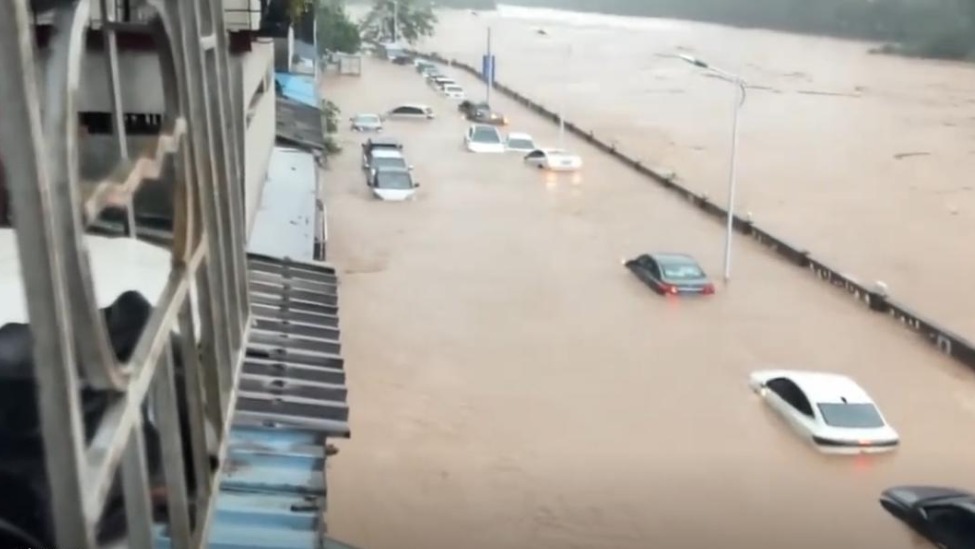
Residents in Fangchenggang city bore witness to an urban landscape transformed. Videos circulating online, shared by locals, depicted scenes straight out of a disaster movie: entire streets turned into raging rivers, road signs half-submerged, and parked cars almost completely swallowed by the floodwaters.
One resident from Jiangping Town in Dongxing vividly recounted the night of July 4th. "The wind and rain were immense," they told reporters. Around 10 PM, the lights went out, plunging the town into darkness. "You could visibly see the water rising fast," they added. In less than two hours, their home on the first floor was inundated with approximately 1.2 meters of water – nearly half a story high. "Without electricity, we couldn't even manage to move our belongings in the dark," the resident lamented, highlighting the suddenness and severity of the disaster.
Record Rainfall & Overflowing Rivers: The Science Behind Guangxi's Extreme Flooding
The scale of Maysak's downpour is staggering. According to the Guangxi Meteorological Bureau, between 6 AM on July 4th and 6 AM on July 5th, 18 townships across 2 cities and 5 counties in Guangxi – including Fangchenggang – experienced extraordinary torrential rain. Dongxing City's Jiangping Town bore the brunt, recording a mind-boggling 533.2 millimeters of rainfall within that 24-hour period. To put that into perspective, that's more than half a meter of rain in a single day.
Compounding the rainfall, powerful winds exceeding Force 8 lashed 112 townships across 13 cities and 36 counties. These extreme conditions prompted a rapid escalation of emergency responses. The regional meteorological observatory elevated its heavy rain warning to Level II at 8 AM on July 5th, swiftly followed by the regional meteorological bureau raising its major meteorological disaster (rainstorm) emergency response to Level II an hour later.
Battling the Tide: Why Seawater Ingress & High Tides Complicate Flood Recovery
The situation on the ground in Fangchenggang and Dongxing is a perfect storm of environmental factors. Local authorities confirmed that in addition to the typhoon and extreme rainfall, coastal areas experienced significant seawater backflow. This, combined with the fact that multiple rivers flowing through urban areas had already surpassed their alert levels, meant that even as the rain eased, the floodwaters were slow to recede.
The Guangxi hydrological department reported that between July 4th and 5th, 8 rivers at 13 monitoring stations across Guangxi were running between 0.38 and a staggering 5.76 meters above their warning thresholds. The Fangcheng River's section near Fangchenggang's Dalu Town recorded the highest exceedance. The regional hydrological center issued a Level Yellow flood warning early on July 5th, predicting that the entire Fangcheng River would likely exceed its alert level by 2 to 5 meters in the next 24 hours, with the urban section of Fangchenggang potentially seeing floods 4 meters above its 5.5-meter alert level.
This complex interplay of riverine flooding, urban runoff, and seawater ingress, exacerbated by high tide periods, means that while the sky might clear, the threat from rising waters lingers, making flood mitigation and recovery incredibly challenging.
Emergency Response Escalates: What Authorities Are Doing to Combat Guangxi's Flood Crisis
Throughout the crisis, local authorities have been working tirelessly. The Fangchenggang Public Security Bureau's Traffic Police Detachment issued continuous alerts since the evening of July 4th, warning of over 10 roads in Dongxing experiencing severe ponding and fallen trees. By the morning of July 5th, further warnings were issued regarding deep waters at the Fangchenggang Huashi toll station due to river backflow, urging residents against attempting to cross.
Emergency management officials confirmed that while the rain intensity has lessened, the combined effect of overflowing rivers and an ongoing high tide cycle means urban floodwaters are receding at a painfully slow pace. The focus now shifts from immediate rescue to managing the lingering inundation and ensuring public safety as the region braces for prolonged recovery efforts.
The Lingering Threat: What Lies Ahead for Fangchenggang and Dongxing After Maysak
As the immediate fury of Typhoon Maysak subsides, the true extent of the damage to Guangxi's coastal communities will begin to emerge. The slow recession of floodwaters poses continued risks to infrastructure, public health, and livelihoods. This catastrophic event serves as a stark reminder of the escalating challenge of extreme weather in the face of a changing climate. For Fangchenggang and Dongxing, the battle against Maysak's aftermath is far from over.


