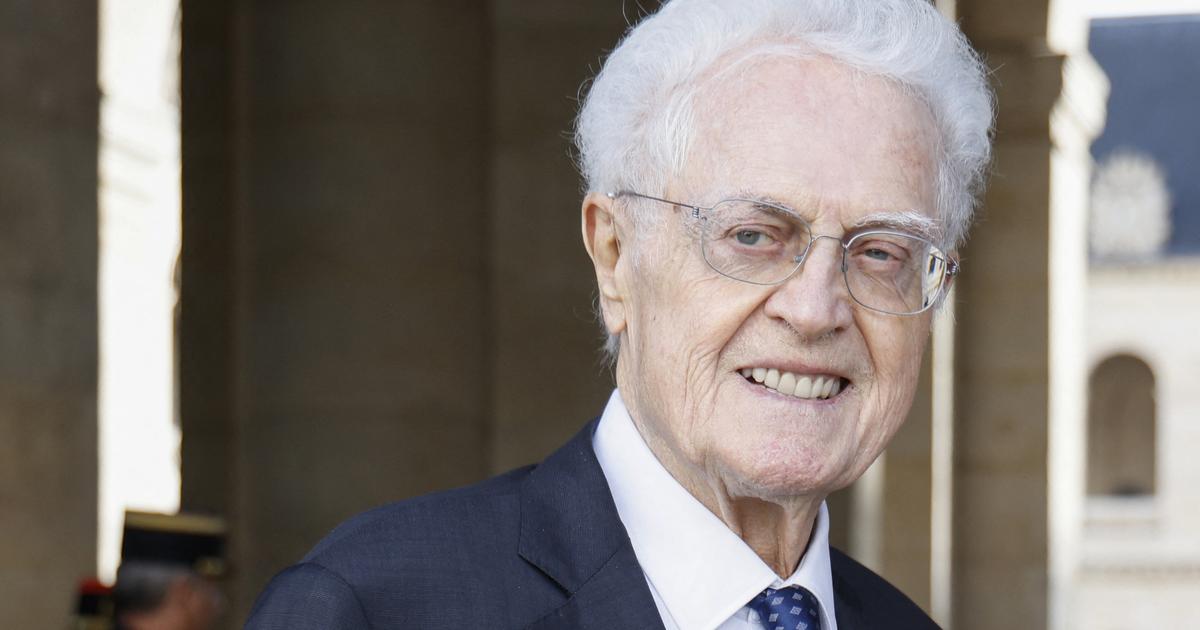
Lionel Jospin: A Political Giant's Enduring Legacy and the Day French Politics Changed Forever
Paris, France – A pivotal chapter in modern French history closed this Sunday with the passing of Lionel Jospin at 88 years old. The former Socialist Prime Minister, whose remarkable political journey saw him rise to the pinnacle of power, will forever be remembered not just for his transformative leadership, but for a single, seismic event on April 21, 2002, which brutally halted his career and sent shockwaves through the nation.
Jospin’s political life, a testament to resilience and reform, was inextricably linked with the Fifth Republic. Yet, few could have predicted his ascent, least of all from his early, more radical beginnings. His story isn't just about a man; it's about the evolution of French socialism and the unexpected turns that define a nation.
From Radical Roots to the Heart of French Socialism
Born in Meudon in 1937, Jospin was steeped in a politically charged household, his father, Robert Jospin, a staunch socialist and an eloquent orator. This upbringing instilled in Lionel a "certain rigorism" but also a passion for debate. However, the younger Jospin carved his own path, distancing himself from both religious dogma and his father's more traditional socialist leanings by rejecting Guy Mollet's policies during the Algerian War. This early independence foreshadowed a political style that would often be pragmatic, sometimes to the chagrin of his ideological purists.
Jospin navigated elite institutions like Sciences Po and the ENA, traditionally bastions of conformity. Yet, it was during these years that he secretly embraced Trotskyism, enlisting with the Organisation Communiste Internationaliste (OCI). This clandestine period, kept under wraps until 1995, saw the future PM as an "infiltrator" in the Foreign Affairs Ministry. This hidden past reveals a deep-seated activist core, perhaps explaining his later drive for social change, even as he moved towards mainstream politics.
The Rise of a Pragmatic Leader Under Mitterrand's Wing
By the early 1970s, Jospin had shed his Trotskyist skin and found his political home in the Socialist Party (PS) after the crucial Épinay Congress in 1971. He quickly caught the eye of François Mitterrand, the charismatic leader of the PS. Despite their contrasting personalities, Mitterrand saw a rising star in Jospin, who became known as the "prince's favorite."
Jospin's ascent was swift. He played a crucial role in forging the union of the left, tackled explosive issues like socialist-communist relations, and eventually became the PS's First Secretary in 1981, guiding the party through Mitterrand’s first septennat. While a political companion, Jospin maintained a clear distance from Mitterrand, cultivating a private life away from Parisian high society. He later served a significant four-year term as Minister of National Education (1988-1992), pushing through reforms he considered ambitious.
The 1997-2002 Cohabitation: A Time of Ambitious Social Reforms
After a period in the political wilderness and a respectable but losing presidential bid in 1995, Jospin rebuilt the left with his "plural left" coalition, uniting Socialists, Communists, and Greens. This strategic alliance paid off handsomely in the snap legislative elections of 1997, catapulting Jospin into Matignon as Prime Minister under President Jacques Chirac – France's third "cohabitation" government.
His five years as PM (1997-2002) are remembered as a period of significant social progress and economic stability. Jospin's government implemented landmark policies that continue to shape French society:
- The 35-Hour Work Week: A controversial but defining reform championed by Martine Aubry, aiming to boost employment and improve work-life balance.
- Universal Health Coverage (CMU): Ensuring access to healthcare for all, regardless of income.
- Personalized Autonomy Allowance (APA): A crucial support system for dependent elderly individuals.
- Civil Solidarity Pact (PACS): A groundbreaking measure in 1999 that recognized civil unions for both heterosexual and homosexual couples, paving the way for marriage equality years later.
Yet, Jospin's tenure wasn't without its critics, especially from the left. Despite promises, his government continued significant privatizations, a pragmatic move that drew ire from his own camp. His infamous 1999 declaration – "One should not expect everything from the State and the government" – after mass layoffs at Michelin, became a symbol of his complex, sometimes contradictory, socialist approach, echoing down to future political figures like Emmanuel Macron.
The Unfathomable Defeat of 2002: A Turning Point for French Democracy
By 2002, Jospin was widely expected to run for president and even win. Polls showed him neck-and-neck with Jacques Chirac, and the idea of the left failing to reach the second round was dismissed with a sardonic laugh just days before the vote. But destiny, as it often does, had a cruel twist in store.
April 21, 2002, became a date etched into French political history. In a stunning upset, the fragmented left vote, coupled with Jospin's perceived overconfidence and a late surge by the far-right, meant he failed to qualify for the second round. Instead, Jean-Marie Le Pen, leader of the far-right Front National, shockingly advanced to face Chirac.
"A clap of thunder," Jospin declared that evening, announcing his immediate withdrawal from political life. It was a dramatic, unexpected end to a brilliant career, a moment of profound national introspection that underscored the growing discontent and the rise of populist forces that define French, and indeed global, politics today. The shock of that day revealed vulnerabilities in the democratic system and presaged the enduring influence of the far-right.
Retirement and Enduring Influence
Jospin largely honored his pledge to retire from active politics. While brief thoughts of a comeback in 2007 flickered, they never materialized. He found a measure of serenity, serving on the Constitutional Council from 2014 to 2019, a prestigious but less partisan role. In recent years, he reflected on his defeat with a sense of calm, demonstrating a dignified acceptance of a fate that no one, least of all himself, had foreseen.
Lionel Jospin leaves behind a legacy defined by both significant achievement and the ultimate political heartbreak. He was a socialist who navigated the complexities of power with pragmatism, a reformer who profoundly shaped France, and a figure whose unexpected downfall continues to offer vital lessons on the fragility of political certainties and the unpredictable currents of democratic change. His passing serves as a powerful reminder of an era when a single election could truly alter the course of a nation.