Middle East on Edge: Why the Iran-US-Israel Standoff is Shaking the World
The Middle East is a powder keg, and recent days have seen sparks flying from every direction. What began as an escalating war of words between the United States, Israel, and Iran has rapidly transformed into a series of direct military confrontations, with profound economic repercussions echoing across the globe. This isn't just a regional spat; it's a complex web of geopolitical chess moves affecting everything from your gas prices to international shipping routes.
British Bases in the Crosshairs: Iran's Warning to the UK Prime Minister
Iran's leadership has issued a stern warning to British Prime Minister Keir Starmer, cautioning that his decision to allow the U.S. to use British military bases for potential strikes against Iran will not go unanswered. Iranian Foreign Minister Abbas Araghtschi took to X, formerly Twitter, to declare that the vast majority of Britons want no part in what he termed "the Israeli-American war." He explicitly stated that permitting U.S. attacks from British soil endangers the UK populace, asserting Iran's right to "self-defense."
This diplomatic saber-rattling comes after the British government confirmed that its agreement with the U.S. includes the use of British bases for "collective self-defense" operations, specifically to neutralize Iranian missile capabilities threatening shipping in the vital Strait of Hormuz. Why does this matter? The UK's decision effectively draws London closer into the direct conflict, making it a potential target and complicating the already volatile regional dynamic.
Direct Strikes and Escalating Military Engagements
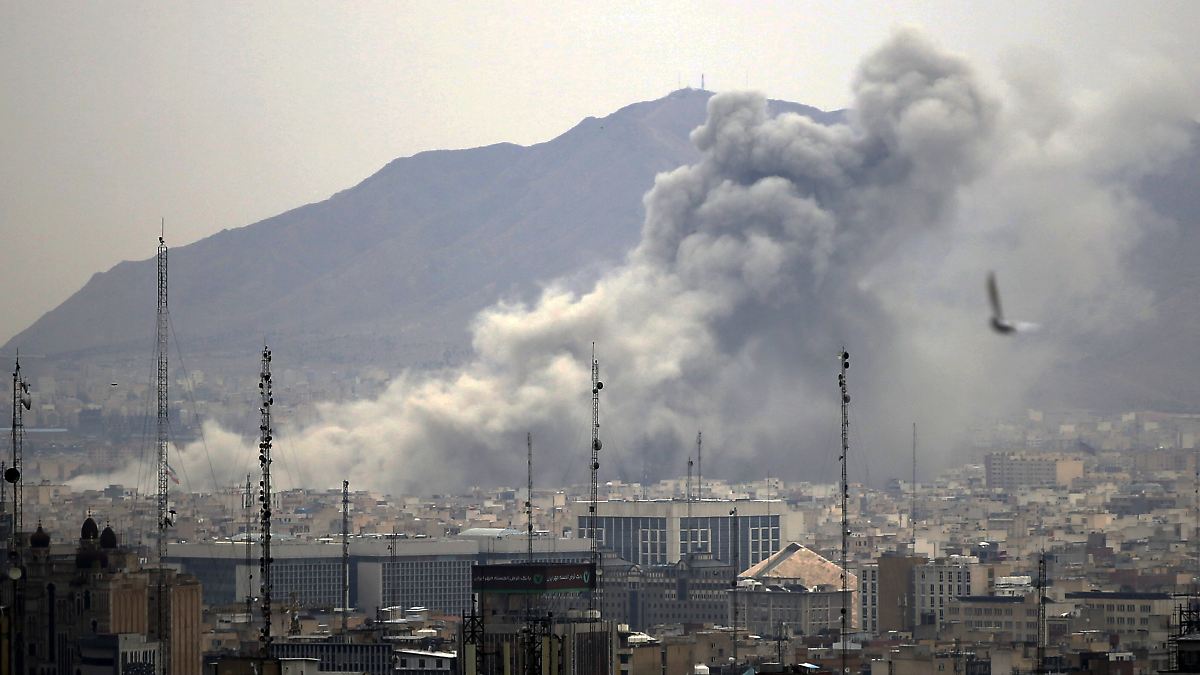
The rhetoric has moved beyond warnings. Israel's military announced it is actively "targeting the Iranian terror regime in Tehran," a direct retaliation following a barrage of Iranian rockets fired at Israeli territory. These strikes mark a significant escalation, pushing the conflict into overt military action between the two long-standing adversaries.
Further fueling tensions, the "Wall Street Journal" reported that Iran launched two medium-range missiles at the joint U.S.-British military base on Diego Garcia in the Indian Ocean. While neither missile reportedly hit the base – one failing mid-flight, the other intercepted by a U.S. warship – the incident demonstrates Iran's willingness to target key strategic assets. Simultaneously, Iranian rocket attacks on Israel continued, met by active Israeli defense systems, and Saudi Arabia intercepted 22 drones over its eastern region, highlighting the broader regional impact of the escalating conflict.
The Strait of Hormuz: A Global Chokepoint Under Pressure
The economic implications of this conflict are already undeniable, with the Strait of Hormuz at the epicenter. This crucial maritime choke point, through which an estimated 20% of the world's oil supply passes, has been blockaded for nearly three weeks. The disruption has sent shockwaves through global energy markets.
In a curious diplomatic move, Iran has reportedly expressed willingness to allow Japanese-affiliated ships to traverse the Strait, engaging in discussions with Tokyo. Why Japan? The island nation relies on the Middle East for about 95% of its oil, with 90% of those deliveries passing through Hormuz. This suggests Iran might be strategically picking its battles, attempting to minimize some international backlash while maintaining pressure elsewhere.
Meanwhile, Iraq has declared "force majeure" on all oil fields operated by foreign companies, citing military operations disrupting shipping through the Strait and halting most of its crude exports. With storage capacities overwhelmed, the economic strain on a major oil producer is palpable. Even U.S. President Donald Trump, weighing in on the issue, stated that the Strait must be protected by the nations that use it, explicitly signaling that the U.S. would not take on that role. This position leaves a vacuum for maritime security, potentially increasing the risk for global shipping.
Economic Domino Effect: From Fuel Costs to Stock Market Dips
The financial toll of the conflict is already stark. United Airlines, citing soaring kerosene costs due to the "Iran-War," announced a 5% cut to its flight schedule for the second and third quarters. CEO Scott Kirby warned employees of potential oil prices reaching $175 per barrel, projecting an $11 billion increase in annual fuel costs – more than double the airline's best-ever profit. Flights to Tel Aviv and Dubai remain suspended, underscoring the regional instability's direct impact on travel and trade.
In an effort to stabilize skyrocketing energy prices, the U.S. government has temporarily lifted sanctions, permitting the delivery and sale of Iranian oil already loaded onto ships before March 20. This temporary reprieve, valid until April 19, mirrors a similar measure for Russian oil and highlights the desperate scramble to ease global supply concerns.
Further afield, the Panama Canal is operating at its maximum capacity, handling 36-38 transits daily, driven by a surge in demand for liquefied natural gas (LNG) tankers from the U.S. The "Iran-War" is redirecting energy trade flows, with the U.S. increasingly serving as an alternative energy supplier, straining critical infrastructure like the Canal.
The broader market impact is equally grim. Major U.S. stock indices closed down significantly, with the S&P 500 falling 5.4%, the Nasdaq 4.5%, and the Dow Jones nearly 7% since the conflict began. This signals investor anxiety and a significant hit to global economic confidence.
Trump's Calculus: The Future of US Involvement in the Iran Conflict
Amidst the escalating clashes, U.S. President Donald Trump has indicated a consideration to scale back military attacks on Iran. Writing on Truth Social, he claimed the U.S. is close to achieving its war objectives, including weakening Iran's missile capabilities, dismantling its air force and navy, destroying its arms industry, and preventing nuclear weapons development, all while protecting Middle Eastern allies. However, his strong rhetoric against a ceasefire – stating, "You don't make a ceasefire when you annihilate the other side" – complicates any potential de-escalation narrative. He also expressed confidence that Israel would follow the U.S. lead in ending the war. Trump's mixed signals add another layer of uncertainty to an already unpredictable situation.
The Unseen Toll: Casualties in Lebanon Mount
Beyond the headlines of geopolitical maneuvering and economic fallout, the human cost of the wider regional conflict continues to grow. Israeli airstrikes have reportedly struck Bir al-Salasil in southern Lebanon. According to Al Jazeera, over 1000 people have been killed in Lebanon since Israel's attacks on its neighbor began. This grim statistic serves as a sobering reminder of the devastating impact on civilian populations caught in the crossfire.