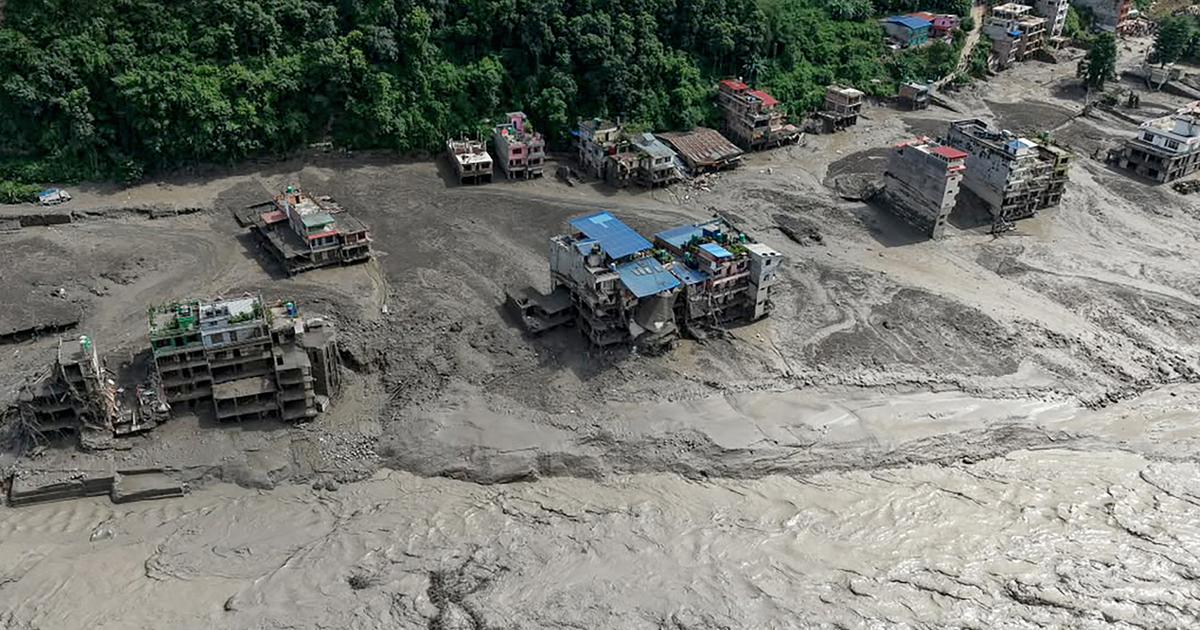
A sudden, catastrophic natural disaster has struck the high-altitude border between Nepal and China. On Wednesday morning, massive torrents of mud and water swept through the Gyirong border crossing—a vital trade and travel route in the Himalayas—leaving a trail of destruction in its wake.
What Happened at Gyirong
At approximately 10:30 AM local time, a violent mudslide tore through the border region. The impact was immediate and devastating on both sides of the frontier:
- Casualties: At least 19 people are confirmed dead. This includes eight casualties in Nepal and "numerous victims" on the Tibetan side.
- Rescues: The Nepalese military deployed helicopters to the rugged terrain, successfully rescuing at least 21 people.
- The Missing: Search and rescue teams are urgently searching for 384 unaccounted-for tourists, consisting of 291 foreigners and 93 Nepalese nationals.
With massive mudflows engulfing populated areas, local officials fear the death toll could rise significantly as search operations continue.
The Cause Behind the Disaster
The disaster was triggered by a sudden ice avalanche that crashed into the Lhende River.
According to Qianggong Zhang, a scientist at the Kathmandu-based International Centre for Integrated Mountain Development (ICIMOD), the falling ice created a temporary dam in the river.
The danger has not yet passed. Because the river blockage remains partially in place, experts warn that a secondary flash flood could occur at any moment, threatening downstream villages and rescue crews. While the summer monsoon season regularly brings landslides to this mountainous zone, the scale of this event is exceptionally severe.
High-Level Emergency Response
The scale of the crisis has prompted urgent actions from both national governments:
- In Nepal: Prime Minister Balendra Shah convened an emergency meeting with the National Disaster Risk Reduction and Management Authority to coordinate relief efforts and assess the damage.
- In China: President Xi Jinping issued an immediate order to mobilize "all available resources." He directed emergency teams to focus on locating the missing, treating the injured, and evacuating residents from high-risk zones.
Public statements from President Xi regarding domestic natural disasters are typically reserved for highly severe incidents, signaling the gravity of the situation at the Gyirong border. Rescue operations remain active despite challenging weather conditions and the ongoing risk of further landslides.


