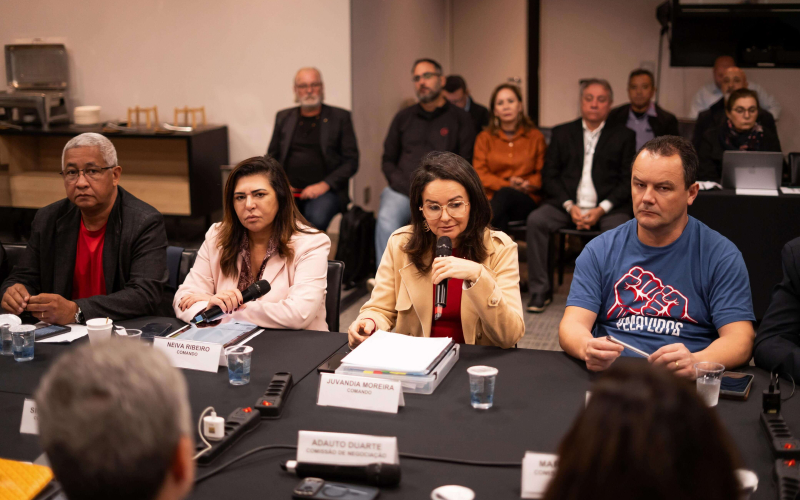
The 2026 National Unified Campaign for Bank Workers in Brazil has reached a critical turning point. On Tuesday, August 25, 2026, the National Command of Bank Workers and the National Federation of Banks (Fenaban) met for their tenth round of high-stakes negotiations.
With tensions rising after previous delays, pressure is mounting on major financial institutions to deliver a concrete and fair economic proposal.
The Backstory of the Stalemate
During the previous negotiation session on August 24, bank representatives failed to present an adjusted salary index or compensation package. This lack of progress sparked significant backlash from union leadership, who accused the banks of stalling.
In response, the banking union—backed by Contraf-CUT—launched a coordinated social media campaign. Online mobilization ramped up the pressure, demanding that bankers respect the category and bring a serious proposal to the negotiating table on Tuesday.
The Core Demands: Salaries & Benefits
The financial sector workers, particularly represented by the São Paulo, Osasco, and region unions, have laid out clear economic demands to counter inflation and improve living standards:
- Real Salary Increase: A demand for a 5% real wage hike (inflation recovery plus a 5% real adjustment) across salaries and all benefits.
- Higher Minimum Wage Floor: Raising the base salary for the category to R$ 7,999.44, aligning with the ideal minimum wage calculated by the economic research institution Dieese.
- Food and Meal Vouchers: Significant increases to the values of both food vouchers (VA) and meal vouchers (VR).
- Profit Sharing (PLR): A substantial valuation and increase in profit-sharing payouts.
A 4-Day Workweek on the Horizon?
Interestingly, before the hard economic negotiations began, Fenaban invited external experts to discuss modernization in the workplace.
Renata Rivetti, founder of Reconnect Happiness at Work—the institution responsible for bringing the four-day workweek pilot to Brazil—presented on the "4x3" model (four working days, three rest days). A shorter workweek is one of the progressive quality-of-life demands championed by the union in this campaign.
Additionally, Regina Viglizzo, commercial manager of the Gi Group, addressed the table regarding professional retraining and labor market reallocation, highlighting the industry's shift toward digital adaptation.
What's Next
Official direct negotiations between the union and Fenaban officially kicked off around noon following the presentations. As the heart of Brazil's financial sector awaits the outcome, the union remains mobilized to secure a commitment from the banks.