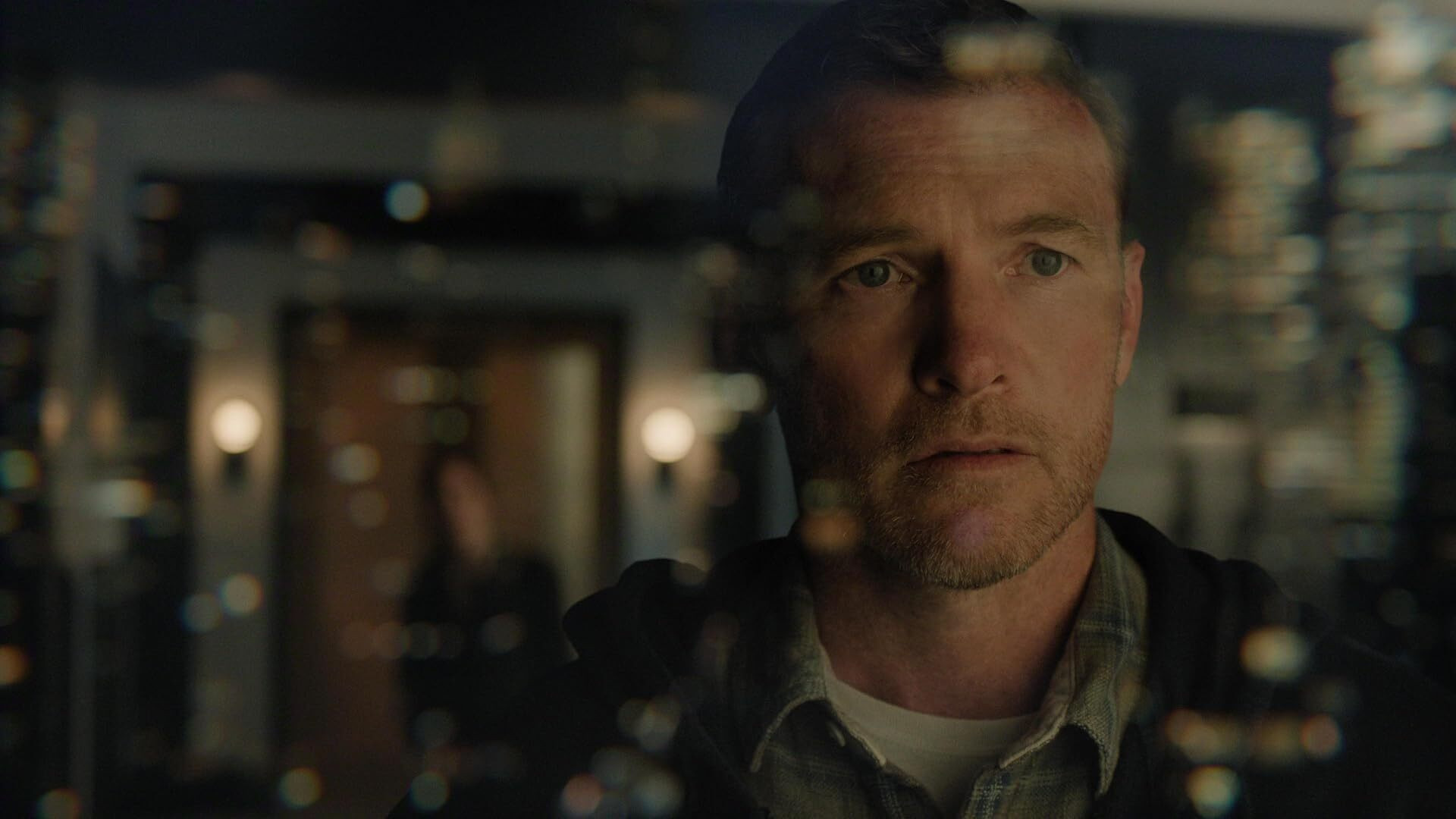
The world of high fashion has always glittered with an irresistible allure, a promise of fame, beauty, and untold luxury. But what happens when that dazzling facade hides a sinister underbelly, where vulnerability becomes a weapon and charisma a cage? HBO's new documentary, "Bring Me the Beauties," pulls back the curtain on one of the most shocking untold stories of the 1980s: the descent of the world's highest-paid male model, Hoyt Richards, into the grip of a terrifying cult led by a self-proclaimed alien.
At WhyThisBuzz, we dig beyond the headlines to explain why these stories matter. This isn't just about a model and a conman; it's a chilling exposé on how psychological manipulation can thrive even in the most glittering circles, twisting aspiration into abject control.
The Golden Boy's Secret: How Supermodel Hoyt Richards Fell into a Cult
For over a decade, Hoyt Richards was the epitome of male modeling success. The muse of legendary photographer Bruce Weber, his face graced luxury campaigns, placing him alongside industry titans like Cindy Crawford and Naomi Campbell. He moved through European fashion capitals with an effortless grace, embodying the very dream of the 80s.
Yet, behind the dazzling smiles and designer clothes, Richards was living a chilling double life. Every night, from opulent hotel suites across the globe, he would call his spiritual leader: Frederick Von Mierers. This man, who claimed to be an extraterrestrial consciousness from the star Arcturus inhabiting a human body, held an iron grip over Richards's mind and finances. Richards, the man who seemed to have everything, was, in reality, surrendering his last penny and every shred of personal autonomy to a sophisticated con.
Unmasking Frederick Von Mierers: The Alien Conman Who Preyed on the Glamorous
Frederick Von Mierers, born plain Frederick Myers, was no intergalactic traveler. He was the son of a Brooklyn dry cleaner, a master of reinvention and psychological warfare. Through sheer charisma, relentless social climbing, and an uncanny ability to spot loneliness and ambition, he built an elaborate fantasy world. He faked ties to the Vanderbilts, invented a Kress family inheritance, and even listed himself in the exclusive Social Register — all complete fabrications. Those who knew his true origins would sometimes mock him, shouting "Freddie Myers!" across the floor of Studio 54, just to watch him flinch.
Frederick called himself a "walk-in," claiming his body housed an alien spirit tasked with preparing humanity for an impending apocalypse. He promised to guide a spiritually evolved elite – his followers, often attractive young people plucked from the fashion world – into a new age. While preaching detachment from "worldly concerns," he simultaneously sold vastly overpriced gemstones, claiming they were "God's thoughts condensed into crystal form." He held seminars in Park Avenue churches and even broadcast his teachings on late-night public access television in Manhattan.
The Allure of 'Eternal Values': How Frederick Seduced the Social Elite
Frederick's operation, known as "Eternal Values," was a masterclass in psychological manipulation. He offered vulnerable, aspiring individuals a sense of being "chosen," special, and destined for something greater. His recruitment strategy was insidious: prospective members would encounter two Fredericks – the absurd cosmic figure and the highly convincing Upper East Side sophisticate. Accepting the alien mythology became a crucial test, a surrender of skepticism that primed individuals for complete control.
As journalist Marie Brenner exposed in a March 1990 Vanity Fair profile, Manhattan prosecutors were already investigating Frederick. Brenner estimated he had swindled nearly $2 million in fraudulent gemstone sales. Frederick died the same month the article appeared, having hidden an AIDS diagnosis while continuing to engage with male prostitutes. Yet, "Eternal Values" survived him, morphing into a more paranoid and harsh entity after his death.
"Bring Me the Beauties": What the HBO Documentary Reveals (and Omits)
Chris Smith's "Bring Me the Beauties" focuses intensely on Hoyt Richards's harrowing journey through the fashion industry and into Frederick's orbit. The documentary starkly portrays the agonizing dichotomy of Richards's life: an international supermodel by day, an obedient, reporting cult member by night. It's a powerful narrative of how public image can starkly contrast with private reality.
Beyond the Screen: Untold Stories of Frederick's Decades-Long Manipulation
What the documentary only hints at, however, is the much wider and deeper scope of Frederick's operation. His seduction tactics began in the late 1970s, long before a 16-year-old Hoyt Richards encountered him on Nantucket in 1981. Frederick had already spent years navigating New York society, actively seeking out and collecting beautiful, vulnerable young people who arrived in Manhattan hoping to transform their lives.
Frederick, once genuinely handsome with a "Robert Redford-esque" appeal before facelifts distorted his look, projected an aura of impeccable authority. He cultivated an impressive Rolodex of socialites, aristocrats, and influential figures, constantly name-dropping individuals like interior design icon Billy Baldwin to legitimize his false persona. These connections cemented his plausibility within New York's elite circles, making his outlandish claims easier for his victims to swallow.
Echoes of Deception: Shocking Accounts from Other Cult Survivors
Hoyt Richards was far from Frederick's only target. The article reveals other chilling accounts, highlighting the widespread and long-lasting trauma inflicted by Frederick.
The Dupont Twins' Ordeal: A Glimpse into Frederick's Early Targets
Richard Dupont, one half of the famous Dupont twins who were Studio 54 fixtures, recalls meeting Frederick at Bloomingdale's when he was just 16 in 1977. Frederick, posing as a Ford model and decorator, radiated glamour. Richard was invited to Frederick's Billy Baldwin-designed apartment, where he was instructed to remove his shoes and even his jeans to protect the "cleaned marble floors" and "silk sofas" – an early, unsettling display of control. Richard later realized he had been sexually abused but, in his youth, couldn't articulate or process the trauma.
His twin brother, Robert, also fell prey, moving into Frederick's apartment in 1979, where he endured repeated sexual abuse and drug use. "Freddie was evil," Robert states bluntly, reflecting on the experience. Both brothers, who do not appear in the HBO documentary, still remember Frederick's phone number by heart decades later, a testament to the indelible mark he left.
Living a Double Life: Supermodel Fame vs. Cult Control
Hoyt Richards's recruitment began innocently enough on a Nantucket beach, where Frederick drew a yin-yang in the sand, telling the teenager he possessed a "higher destiny." This "emotional engulfment," as Hoyt describes it, replaced critical thinking with a powerful desire to be special.
Frederick then strategically leveraged Hoyt's nascent career. He introduced Hoyt to Ford Models president Joey Hunter, launching a supermodel career that saw Richards photographed by legends like Richard Avedon and Helmut Newton. But this meteoric rise to fame only deepened his entanglement. While surrounded by the glitterati – Linda Evangelista, Naomi Campbell – Hoyt lived a life observed "from behind glass." Every success, every booking, every moment of fame was filtered through Frederick's control.
He returned to a Manhattan apartment where cult members slept on mats, surrendered their earnings, and meticulously reported their thoughts and behaviors. Romantic relationships were forbidden, and independent identity systematically eroded. "I fell so in love with the narrative," Hoyt explains, "that I started self-censoring to preserve it."
Escaping the Apocalypse: Hoyt Richards' Break from 'Eternal Values'
Frederick had convinced his followers that the world would end in 1999, with spacecraft descending to airlift the chosen to rejuvenation chambers. The mythology was thrilling to Hoyt, who grew up on Star Wars. After Frederick's death in 1990, the remaining male members of "Eternal Values" relocated near Asheville, North Carolina, to an estate built with Hoyt's modeling earnings, stockpiling food and guns for the prophesied apocalypse.
As the doomsday deadline approached, Hoyt's international travels began to puncture the cult's narrative. "I’m still jetting around at Europe, Paris, Milan, Stockholm," he recalls, "And I’m looking around and going, ‘Well, all the signs that he had told us were going to lead up to this thing... none of that’s happening.'"
When he tentatively questioned the timeline, he faced systematic humiliation and abuse from the new self-appointed leader, who pushed him to contemplate suicide. Leaving felt less like rebellion and more like a desperate act of self-preservation.
On July 3, 1999, Hoyt made a life-altering call to fellow model Fabio. Fabio, a global romance icon, immediately bought Hoyt a plane ticket to Los Angeles, offered him a place to stay for 18 months, and even lent him a Porsche. This unconditional friendship became Hoyt's first genuine human connection in decades.
The Lingering Scars: Victimhood, Complicity, and the Path to Healing
Not all survivors found such a soft landing. Jacki Adams, another Ford model and whistleblower for the Vanity Fair exposé, saw her career destroyed. For Hoyt, however, his involvement ironically led to more bookings, a strange surge in celebrity fueled by morbid fascination.
This stark contrast forced Hoyt to confront a painful truth: victimhood and complicity aren't mutually exclusive. While he didn't recruit himself, he acknowledged ignoring warning signs, rationalizing contradictions, and professionally benefiting while others paid a steep price for speaking out. As he puts it, "You can say, ‘I was drunk’ — but you’re still accountable."
Director Chris Smith was drawn to this very contradiction: a man publicly embodying aspiration while privately surrendering every element of autonomy. Frederick instinctively understood that proximity to beauty and status legitimized him, turning models into recruitment tools. Hoyt's public success paradoxically made it harder to admit anything was wrong privately; success became twisted proof that Frederick must be right.
From Cult Member to Counselor: Hoyt Richards' Mission to Help Others
Today, Hoyt Richards channels his harrowing experiences into helping others. He works as a cult exit counselor, guiding families in recovering loved ones from high-control groups. He's engaged to Donna Flagg, a dancer he was pressured to abandon by the cult decades ago, finding a powerful full-circle moment of healing and reclamation.
When he speaks of manipulation, his words carry the profound specificity of someone who has intimately navigated that dark terrain: love-bombing, isolation, the systematic teaching of self-distrust. Yet, he offers a message of hope: "the pilot light never goes out." The critical thinking cults try to extinguish, he insists, "gets turned down so low, you can’t see it. But it never goes out." It's a powerful reminder that even after the deepest indoctrination, the capacity for independent thought and healing endures.