Gerry Adams on Trial: High Stakes as Former Sinn Féin Leader Faces Bombing Victims
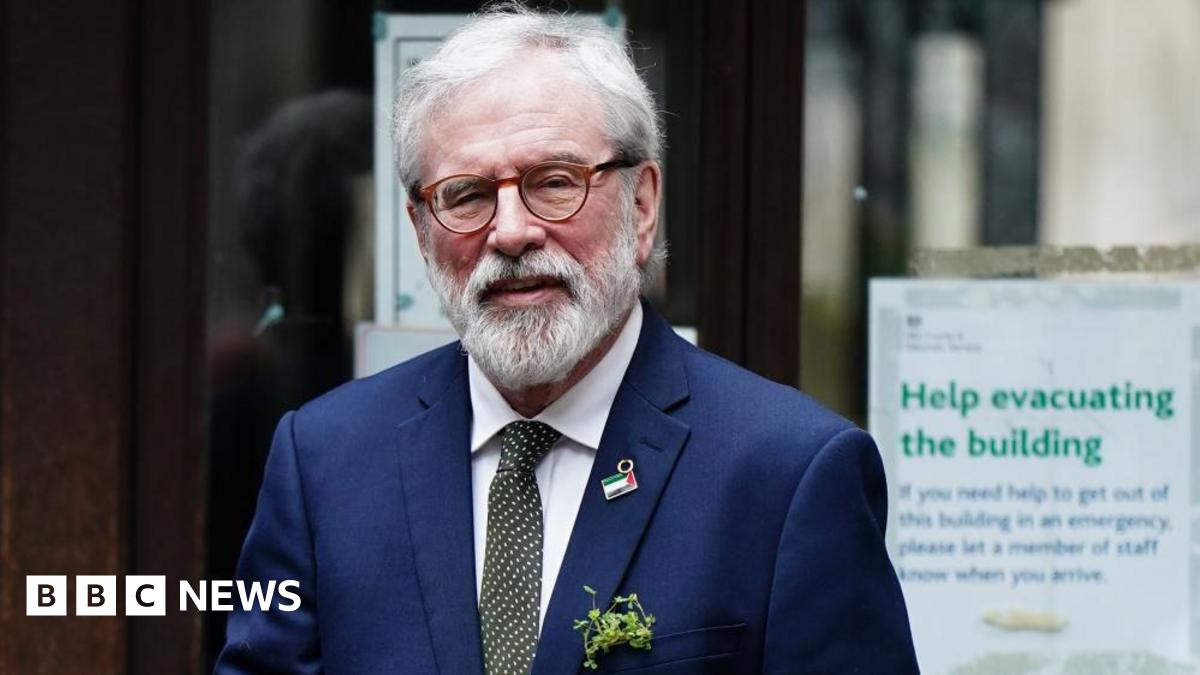
In a courtroom drama that echoes the tumultuous history of Northern Ireland, former Sinn Féin leader Gerry Adams, 77, took the stand in London this week, facing a civil trial seeking to hold him personally liable for horrific IRA bombings decades ago. His testimony was unequivocal, delivered on St. Patrick's Day with a sprig of shamrock on his lapel: he was "never a member of the IRA or its army council" and had "no involvement whatsoever" in authorizing, planning, or conducting the attacks that injured the claimants.
This isn't just another legal proceeding; it's a high-stakes reckoning with a past that continues to cast a long shadow over the peace process. Three men – John Clark, a victim of the 1973 Old Bailey bombing, and Jonathan Ganesh and Barry Laycock, injured in the 1996 Docklands and Manchester Arndale Centre attacks respectively – are pushing for a landmark High Court ruling. They believe Adams is as culpable as those who planted the bombs, a belief underscored by their crowdfunding efforts to finance this costly legal battle.
The Long Shadow of The Troubles: What Are the Accusations Against Gerry Adams?
The core of the claimants' argument is that Adams, despite his public denials, held a pivotal leadership role within the Provisional IRA. Their legal team, led by former Director of Public Prosecutions Sir Max Hill KC, presented evidence from 11 witnesses and challenged Adams directly on his long-standing stance.
For victims, this trial represents a chance for justice and accountability that has often felt elusive. The bombings they endured were devastating:
- 1973 Old Bailey Bombing: A car bomb exploded outside London's Old Bailey courthouse, injuring over 200 people.
- 1996 Docklands Bombing: A massive truck bomb in London's Canary Wharf killed two, injured over 100, and marked the end of the first IRA ceasefire.
- 1996 Manchester Arndale Centre Bombing: Another huge truck bomb in Manchester's city centre injured over 200 people and caused widespread devastation.
The claimants allege Adams's "instrumental" role in the Old Bailey decision and that it was "inconceivable" he wouldn't have been involved in authorizing the 1996 bombings, especially the Docklands attack that shattered a fragile peace.
Adams's Defense: "Never a Member" But "Stood By My Neighbours"
In a 20-page witness statement, Adams maintained his decades-long denial of IRA membership or any command role. He emphasized his "political work" since the late 1960s, aimed at ending the conflict and promoting Irish unity.
When pressed by Sir Max Hill KC about defending IRA actions, Adams offered a nuanced response: "I do not defend all the IRA actions, but my position is based on the broad principle that people have the right to resist occupation." He acknowledged "dastardly things that were done that should never have been done," but crucially added, "I do not distance myself from the IRA, while being very, very clear that there were dastardly things that were done that should never have been done." In a particularly poignant moment, he stated, "I do not stand by everything that they did, but these were my neighbours."
He also addressed a contentious photograph of him in a black beret at an IRA funeral, calling his participation in the guard of honour an "honour" – a point he compared to his participation in Nelson Mandela's funeral, where no one would suggest he was an ANC member.
The Prosecution's Scrutiny: Challenging Decades of Denials in Court
Sir Max Hill's questioning dug deep into Adams's carefully constructed narrative. He directly put it to Adams: "You have, over a long period of time, chosen to stand by the IRA." The prosecution's strategy is to highlight the perceived contradictions between Adams's public persona as a peacemaker and the intelligence allegations of his past.
Crucially, several former police and Army personnel, testifying for the claimants, have presented intelligence material alleging Adams was on the IRA army council from the late 1970s until 2005. Retired colonel Richard Kemp went as far as to claim it was "inconceivable" Adams would have been unaware of, or uninvolved in, the authorization of the 1996 bombings.
Legal Hurdles and Historical Reckoning: The Wider Implications of This Case
Adams's legal team has mounted a vigorous defense, arguing that the case relies on "an assortment of hearsay" and has been brought several decades too late, falling outside the three-year limitation period set out in 1980 legislation. This legal technicality is significant, as a pre-trial ruling means Adams cannot recover his six-figure legal costs from the claimants, even if he wins. This financial burden highlights the immense personal risk involved for both sides.
This trial is not Adams's first encounter with legal scrutiny over his alleged IRA past. He was charged with IRA membership in 1978 (case dropped), and his only Troubles-era convictions for attempting to escape prison were quashed in 2020. He has also been questioned at the Ballymurphy inquest in 2019 and during a libel case against the BBC in 2025.
The outcome of this trial, presided over by Mr. Justice Swift, will resonate far beyond the London courtroom. For the victims, it's a fight for acknowledgement and justice. For Gerry Adams, it's another chapter in a lifetime spent navigating the complexities of peace and conflict, perpetually grappling with his past. For Northern Ireland and the UK, it's a stark reminder that the wounds of The Troubles, and the quest for accountability, are far from healed.