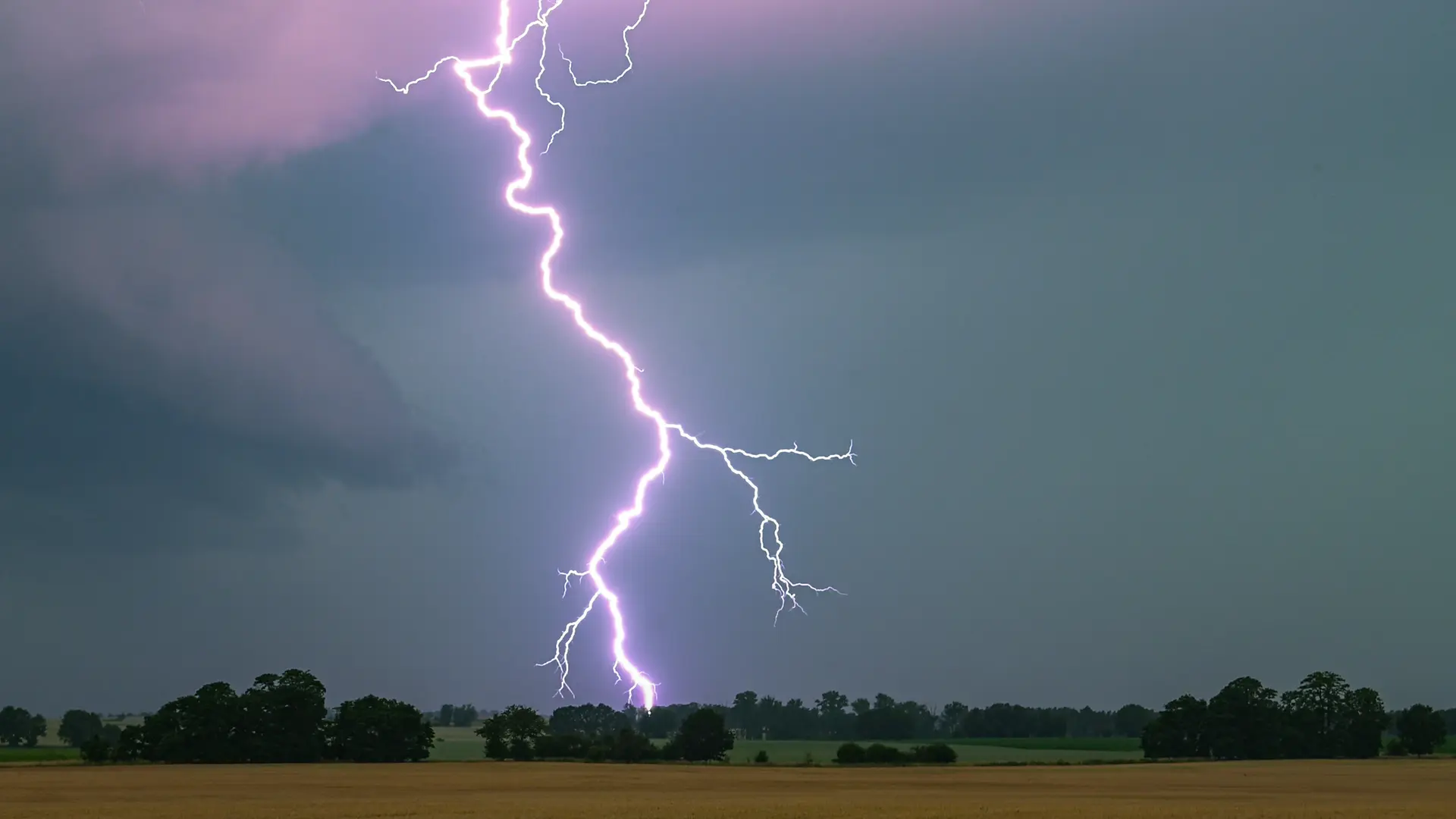
Germany is once again sweltering, caught in a punishing cycle of extreme heatwaves and violent thunderstorms that are rapidly becoming the uncomfortable norm. While the current mercury-busting temperatures might feel like an anomaly, experts warn they're a stark preview of a future where the "Jahrhundertsommer" (century summer) becomes a regular fixture.
The Immediate Inferno: Germany's Latest Heatwave and Storms
Just as you thought you could finally air out your apartments, the relentless heat returns. Central Germany – specifically Saxony, Saxony-Anhalt, and Thuringia – recently endured a brutal peak, with temperatures soaring to a blistering 38 degrees Celsius. This brief inferno was followed by a familiar companion: intense local thunderstorms, bringing torrential rain, hail, and severe wind gusts that battered regions like the Zittauer Gebirge and parts of Saxony-Anhalt.
MDR meteorologist Michaela Koschak highlighted the dangerous cocktail of heat and humidity that fuels these volatile storms. "All the ingredients are there for severe localized showers and thunderstorms to develop," she explained, a grim reality confirmed by official warnings from the German Weather Service (DWD) for areas spanning from Wittenberg to the Sächsische Schweiz-Osterzgebirge.
While a temporary respite and cooler air are forecast for Friday, don't pack away your fans just yet. Koschak warns that by Sunday, temperatures in Central Germany are expected to rebound to 35 degrees, ushering in yet another major heatwave by the end of next week. This isn't just a bad week; it's a pattern.
Unpacking Germany's Escalating Heat Crisis: The Climate Data Behind the Burn
This isn't just weather; it's a dramatic climate shift, and the numbers are chilling. Data from the DWD reveals a terrifying trend:
- Doubling Down on Heat: Between 1963 and 1992, Germany averaged 4.5 "hot days" (over 30°C) per year. From 1993 to 2022, that number has doubled to 9.1 days annually.
- Breaking the 40-Degree Barrier: For decades, 40°C was an almost unheard-of temperature in Germany, crossed only once in the entire 20th century (July 27, 1983). Yet, in the 21st century, we've seen temperatures exceed 40 degrees multiple times – in 2003, 2015, 2019, and 2022.
- The Climate Change Footprint: Experts confirm that without human-induced climate change, Germany's average temperatures would be up to two degrees Celsius cooler in many regions.
This isn't an occasional extreme; it's the new baseline, driven by undeniable global warming.
Beyond the Thermometer: The Human Cost of Extreme Heat in Germany
The impact of these prolonged heatwaves extends far beyond discomfort. It's a public health crisis that Germany, by many accounts, is critically unprepared for.
Why Germany Isn't Ready for Rising Temperatures: Public Opinion on Preparedness
A recent MDRfragt-Barometer survey found that a staggering eight out of ten Germans believe the country is poorly equipped to handle heatwaves. There's a particular plea for better protection in vulnerable settings like clinics, nursing homes, schools, and daycares.
The Silent Killer: Heat-Related Deaths and Public Health Risks
The consequences are dire. In just the last two weeks of June alone, over 5,000 people died in Germany due to extreme heat. The World Health Organization (WHO) states that many of these deaths were preventable, underscoring the urgent need for comprehensive heat action plans. As temperatures soar, questions also arise about the long-term habitability of poorly insulated spaces, like attic apartments, in urban centers.
Infrastructure Under Fire: From Melting Rails to Dying Rivers
The scorching sun isn't just affecting people; it's putting immense strain on Germany's critical infrastructure and natural ecosystems.
How Heat Destroys Infrastructure: The Threat of Melted Rails and Low River Levels
Reports of melted train tracks are becoming disturbingly common, disrupting travel and posing significant safety risks. Meanwhile, Germany's iconic waterways are suffering. Rivers like the Spree are experiencing alarmingly low water levels, a consequence of empty reservoirs and declining groundwater. This isn't just a scenic issue; it impacts shipping, energy production, and the vital ecosystems that depend on these rivers.
Collapsing Ecosystems: The Impact on Aquatic Life
For fish like trout and other aquatic life, the superheated rivers and lakes turn into a deadly trap. Entire freshwater ecosystems face collapse as water temperatures rise to fatal levels, highlighting another urgent environmental crisis driven by the heat.
Cities in Crisis: Battling Urban Heat Islands and Seeking Solutions
Cities, with their dense concrete, stone, and asphalt, act as massive heat sinks, creating "urban heat islands" where temperatures remain stiflingly high even after sunset. This phenomenon exacerbates the health risks for millions of urban dwellers.
However, solutions are emerging. Cities are fighting back with initiatives like:
- More Trees and Green Spaces: Expanding tree canopies and creating parks provide natural shade and cooling.
- Green Facades and Roofs: Introducing vegetation on buildings helps absorb heat, reduce energy consumption, and improve air quality.
- Water Features: Urban fountains and misting systems can offer localized cooling.
These concepts are crucial steps towards making urban environments more livable in the face of escalating temperatures.
Staying Safe in the Swelter: DWD's Crucial Recommendations
As Germany navigates these "century summers," the DWD offers vital advice for staying safe:
- Avoid Direct Sun: Especially during peak hours.
- Shift Outdoor Activities: Schedule physical exertion for early morning.
- Hydrate Regularly: Drink plenty of water.
- Wear Light Clothing: Opt for loose, light-colored garments.
- Eat Lightly and Avoid Alcohol: Support your body's cooling mechanisms.
- Protect and Ventilate Homes: Keep windows covered during the day and open them for ventilation when it's cooler at night.
The era of the casual German summer is rapidly fading. What we're experiencing now is a stark, recurring reminder that climate change is here, and it demands not just adaptation, but a fundamental shift in how we live, build, and prepare for the future. The "Jahrhundertsommer" is no longer a historical event; it's a current reality challenging the resilience of a nation.


