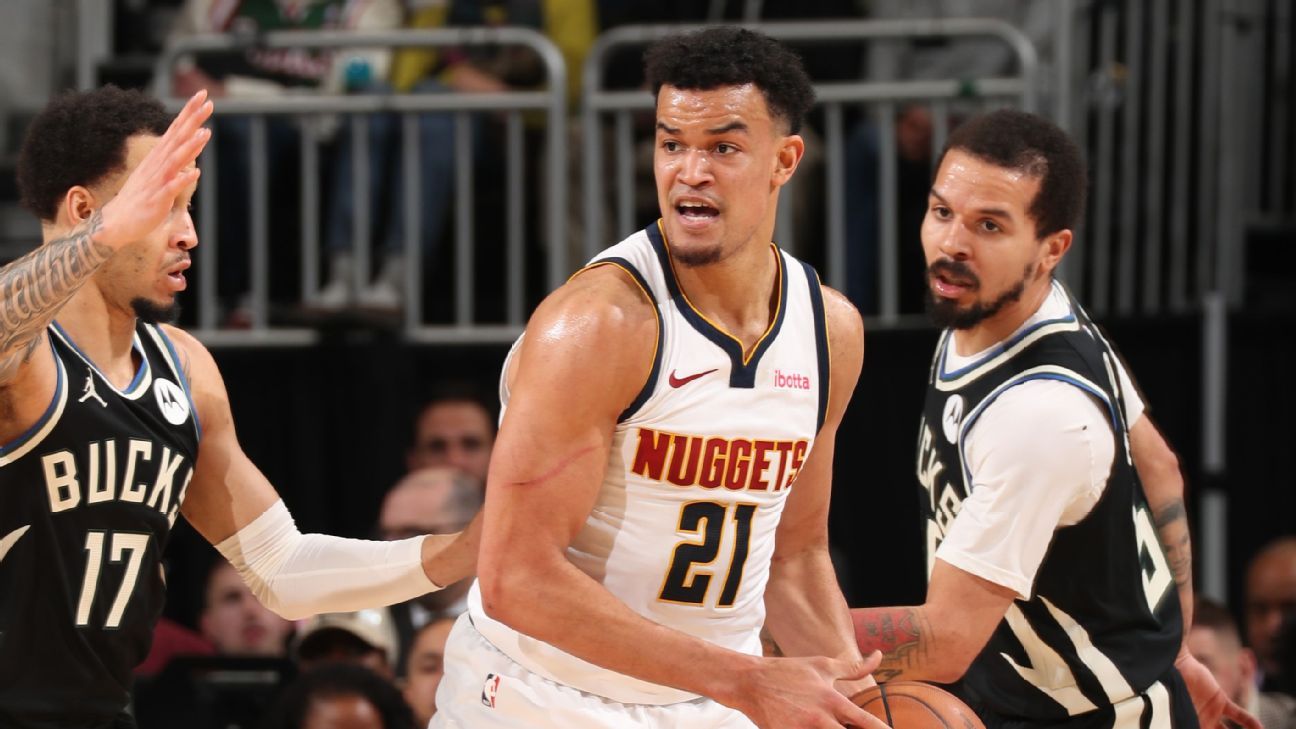
Denver Dives Deep: Spencer Jones Match & The Exploding Luxury Tax Bill
The Denver Nuggets have just sent a thunderous message across the NBA: they are all-in. In a move that's shaking up the league's financial landscape, the Nuggets matched the Oklahoma City Thunder's two-year, $12 million fully guaranteed offer sheet for key forward Spencer Jones, ensuring he remains in Denver. But this isn't just a simple retention; it's a strategic earthquake with massive financial tremors, directly impacting the looming decision on promising restricted free agent Peyton Watson.
This isn't a team shying away from commitment. Despite already facing significant luxury tax penalties, the Nuggets' decision to match Jones's offer will nearly double their projected tax bill, ballooning it from $36 million to an eye-watering $68 million. For the first time under the current collective bargaining agreement, Denver is set to breach the dreaded "second apron," a punitive threshold designed to restrict spending. This isn't just about paying more; it's about operating under stricter rules and setting a clear precedent for how they'll handle their next big decision.
Why Spencer Jones Was Worth the Astronomical Price Tag for the Nuggets
So, why such a monumental financial gamble for Spencer Jones? The Nuggets' reasoning boils down to two key factors: homegrown talent and crucial on-court impact. Signed as an undrafted free agent in 2024, Jones quickly developed into a vital contributor, embodying the team's player development success.
Last season, Jones wasn't just a role player; he was a playoff sniper. He famously led the entire NBA in 3-point shooting during the postseason, converting an astounding 69.2% from beyond the arc. In the 2025-26 regular season, he averaged 5.5 points and 3.3 rebounds across 64 games (37 starts), demonstrating his versatility and reliability. For a team with championship aspirations, retaining a proven, clutch shooter who understands their system is invaluable, even if the price tag feels exorbitant. It's a clear statement: the Nuggets are willing to pay for continuity and proven performance within their core.
The Peyton Watson Conundrum: Next Up in Denver's High-Stakes Financial Game
With Spencer Jones now locked in, all eyes immediately pivot to Peyton Watson, another restricted free agent whose situation has become even more precarious for the Nuggets. While Jones was a known commodity, Watson represents a different kind of investment – one in raw talent and immense potential.
Watson, a high-flying, athletic forward, has been steadily improving and has caught the attention of multiple teams across the league. The Atlanta Hawks, Milwaukee Bucks, and LA Clippers are reportedly all pursuing him, eager to capitalize on his upside. For Denver, matching an offer sheet for Watson would add another significant chunk to their already colossal luxury tax bill, potentially pushing them into even deeper, more restrictive financial territory.
Why Peyton Watson's Future Matters So Much to the Denver Nuggets
Peyton Watson isn't just another player; he's a potential cornerstone for the future. His defensive versatility, length, and burgeoning offensive game make him a prized asset. Losing him would be a blow not just to the current roster's depth but also to the long-term vision of a team aiming to sustain a championship window.
The Nuggets' willingness to pay a record-setting luxury tax for Jones signals their commitment to winning now and keeping their successful roster intact. However, Watson's situation represents a fork in the road. Can they afford to bring back both key restricted free agents, or will the financial constraints force them to make an agonizing choice? The stakes are incredibly high, as the "second apron" isn't merely about money; it comes with severe team-building limitations, including restrictions on trades, exceptions, and even draft pick movements.
Why This Buzz: What Denver's Tax Tangle Means for the Championship Window
The Nuggets' audacious moves signal a fundamental shift in their organizational philosophy. Historically, Denver has been relatively conservative with luxury tax payments, having paid a total of $53 million since the system's inception in 2002-03. This current season's projected tax bill alone dwarfs that entire history.
What does this mean for the Nuggets' championship window and long-term strategy?
- Unwavering Commitment: It underscores the ownership's deep commitment to maximizing the current championship window around their superstar core. They believe this roster, even with its expensive role players, has what it takes.
- Roster Continuity Over Cost: The strategy prioritizes retaining proven talent and team chemistry, even if it comes at an unprecedented financial cost. This could be a double-edged sword: while it keeps the team strong, it limits future flexibility.
- The Second Apron's Bite: Entering the second apron isn't just about paying fines. It severely restricts future roster maneuvers, making it harder to add talent, conduct trades, or use exceptions. This means every future decision becomes even more critical.
- The Watson Litmus Test: The eventual outcome with Peyton Watson will be the ultimate test of how far the Nuggets are willing to go. Matching his potential offer could push their tax bill into astronomical, uncharted territory, cementing their status as the NBA's biggest spenders.
The Denver Nuggets are playing a high-stakes game of financial chess, betting that continuity and homegrown talent are worth every single penny. As the league watches, the decision on Peyton Watson will not only define the immediate future of the Nuggets but also send a powerful message about the lengths teams are willing to go for a shot at glory.

