The Final Bell: Inquest Begins for Boxing Legend Ricky Hatton
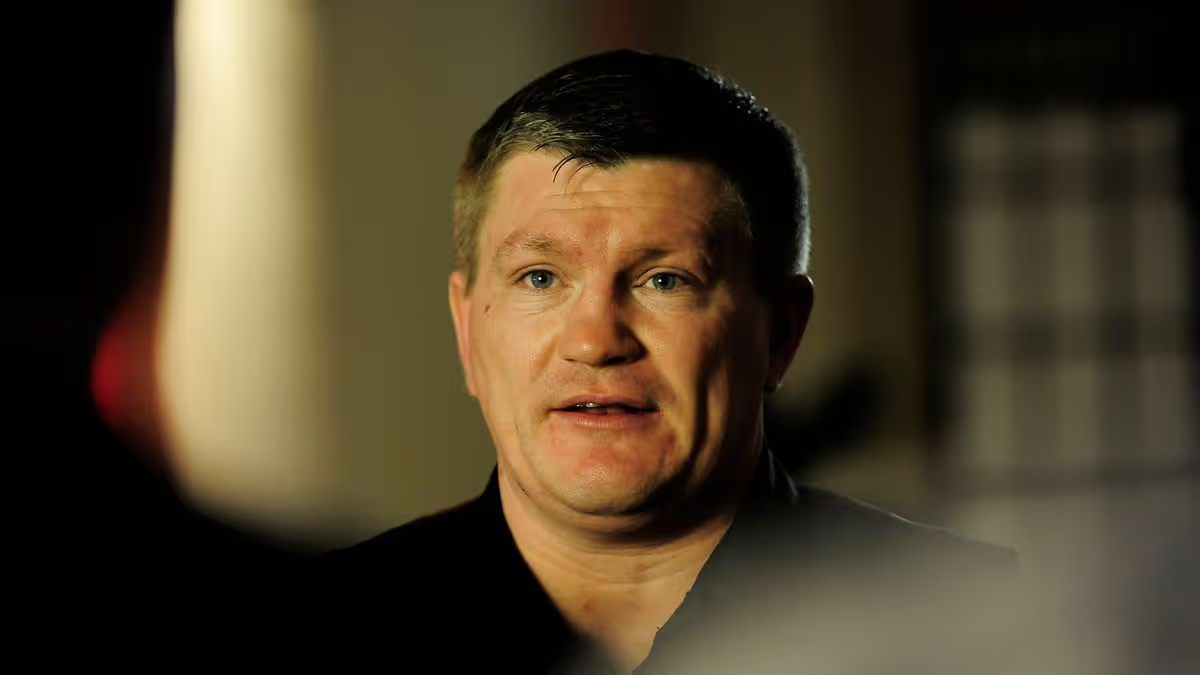
The boxing world, still reeling from the shocking news of Ricky Hatton's passing, now turns its attention to Stockport Coroner's Court, where an inquest has officially begun into the death of the beloved "Hitman." Initial revelations from a pre-inquest hearing paint a somber picture, with a provisional cause of death given as hanging for the 46-year-old former world champion. This legal process aims to piece together the final moments of a man adored by millions, yet, as we now understand, battling profoundly personal demons.
Unraveling Ricky Hatton's Final Moments: What the Court Heard
The timeline leading up to Hatton’s tragic discovery reveals a sudden and heart-wrenching turn of events. Family members reportedly saw the boxing legend on September 12, noting he appeared "well." However, he failed to attend a scheduled event the following day. The stark reality hit on the morning of Sunday, September 14, when his manager, Paul Speak, arrived at Hatton's Hyde home to take him to Manchester Airport for a planned flight to Dubai. It was then that Speak found Hatton "unresponsive," a moment that sent shockwaves through the sporting community and beyond.
The Contrast: A Champion's Future Plans Amidst Hidden Struggles
What makes Hatton's death particularly poignant are the conflicting narratives emerging. His family maintained he was "in a good place," actively planning for the future, with bags even packed for a potential comeback fight in Dubai that December. This image of hope and forward momentum stands in stark contrast to Hatton's own public admissions over the years. The "People's Champion" had been remarkably candid about his struggles with mental health, particularly after his second retirement from the ring in 2012 following an ill-advised comeback. He openly spoke about battles with drink, drugs, and even past suicide attempts, revealing a vulnerability that few suspected beneath his charismatic exterior.
The People's Champion: Why Ricky Hatton Connected with Millions
Ricky Hatton wasn't just a fighter; he was a phenomenon. Known affectionately as "The Hitman," his all-action, relentless style in the ring earned him legions of fans on both sides of the Atlantic. Beyond the ropes, his down-to-earth demeanor, sharp wit, and humble nature made him incredibly relatable. A proud Mancunian and fervent Manchester City supporter, Hatton transcended boxing, embodying a spirit that endeared him to the masses. This immense popularity was evident in the outpouring of grief and tributes from across the globe – from fellow boxers and athletes to celebrities and ordinary fans – all stunned by the loss of a doting father and grandfather.
A Community United in Grief: Remembering Ricky Hatton's Legacy
The scale of public mourning for Ricky Hatton was immense. Thousands lined the streets of Manchester for his funeral at the city's iconic Cathedral, a testament to his impact. High-profile figures from the worlds of music, football, and boxing – including Oasis frontman Liam Gallagher, Wayne Rooney, and Tyson and Tommy Fury – were among those who paid their respects, highlighting the wide reach of his influence and the depth of affection felt for him.
As the inquest proceeds, it serves as a stark reminder of the hidden battles many face, even those who appear invincible in the public eye. Hatton's journey, from the pinnacle of boxing to his deeply personal struggles with mental health, underscores the critical importance of understanding and addressing these challenges. The world remembers "The Hitman" not just for his knockouts, but for the complex man he was, a champion who fought his hardest both in and out of the ring.
If you or someone you know is struggling with mental health, please reach out to support services. Help is available, and you are not alone.