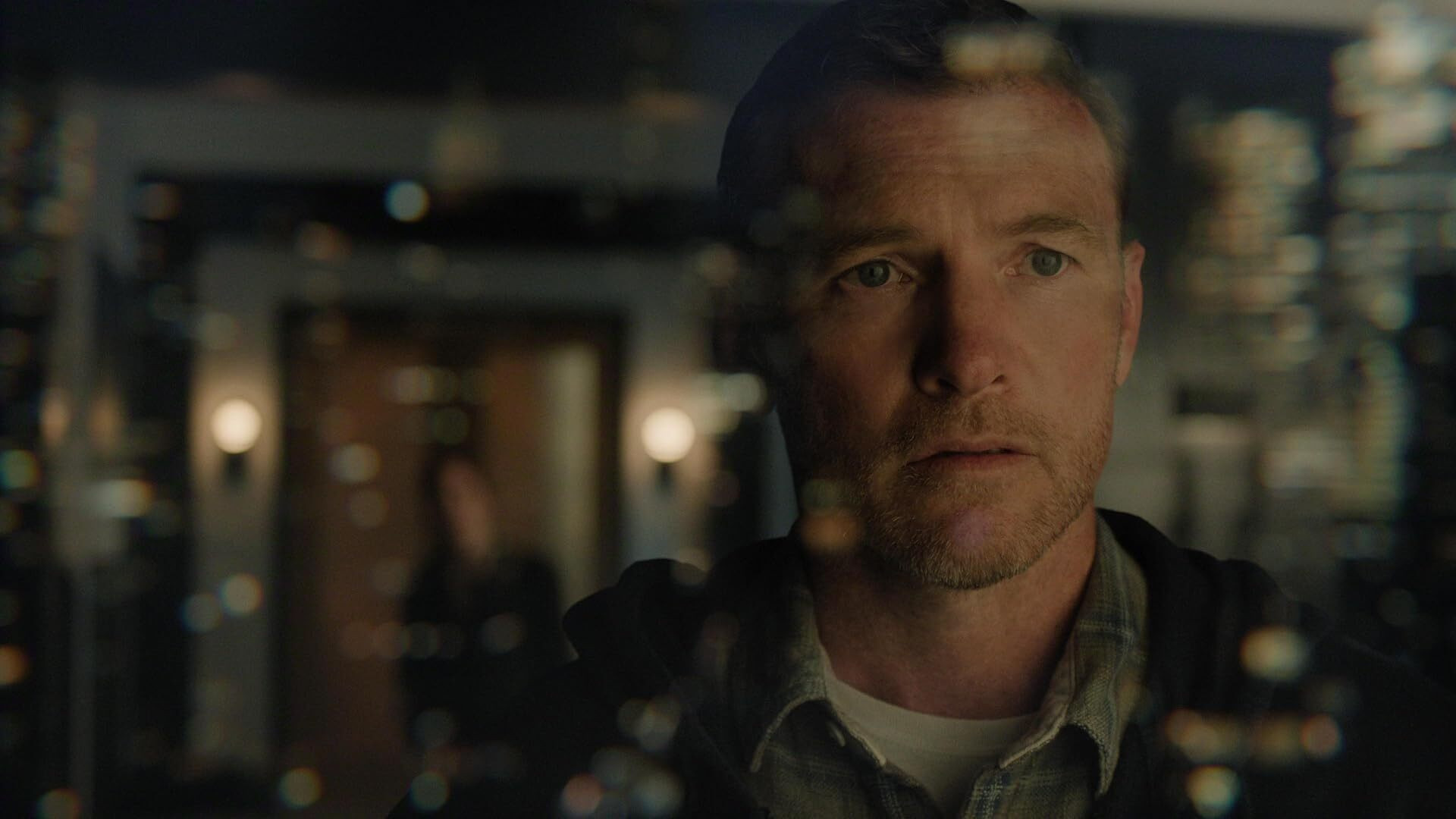
The movie industry just got a jarring wake-up call, and it smells like stale carpet and fluorescent lights. A24's "Backrooms," a feature film adaptation of the internet's most unsettling creepypasta, didn't just open big – it absolutely shattered expectations, delivering a box office performance that has Hollywood's old guard scrambling for answers.
This isn't just about big numbers; it's about a fundamental shift in how blockbusters are made, marketed, and consumed. An under-$10 million budget film, fueled by a dedicated online fanbase and smart, native marketing, just stared down Disney's mega-budget "The Mandalorian and Grogu" and won. This isn't a fluke; it's a blueprint.
The Unstoppable Rise of Backrooms: A Box Office Phenomenon Explained
Forget what you thought you knew about movie launches. "Backrooms," directed by then-16-year-old viral sensation Kane Parsons, pulled in a staggering $38.4 million on its first day/previews alone. We're looking at an opening weekend between a mind-boggling $85 million and $90 million. For A24, the indie studio darlings, this isn't just a record; it's a seismic event, dwarfing their previous best, "Civil War" ($25.5M opening).
But here's the kicker, and why WhyThisBuzz is buzzing: "Backrooms" didn't just beat A24's records, it outmuscled Disney's "The Mandalorian and Grogu", which debuted to $33.7 million first day and an $81.6 million three-day total just last weekend. Let that sink in. A niche horror film, born from digital folklore, out-earned a Star Wars behemoth backed by a near-$100 million Disney marketing blitz.
How Backrooms' Lean Marketing Conquered Hollywood Goliaths
The contrast in marketing strategy is stark and illuminating. While Disney deployed a 360-degree, domestic campaign worthy of its IP, "Backrooms" opted for a laser-focused, internet-native approach. Its promotional spend, reportedly in the ballpark of Neon's "Longlegs" (under $10 million, though "Backrooms" was slightly more), directly targeted its established, rabid fanbase. This isn't about carpet-bombing every billboard; it's about connecting authentically where the audience already lives online.
And the global appeal is undeniable. "Backrooms" is projected to rake in an estimated $36 million from 50 offshore territories this weekend, pushing its global start to a massive $121 million-$124 million. It's poised to beat "Mandalorian" for the worldwide weekend top spot, launching successfully in major markets from the UK to South Korea. The global internet culture is proving to be a universal language for scares.
Decoding the Backrooms Audience: Who's Fueling the Frenzy?
The audience profile for "Backrooms" paints a clear picture of its success. PostTrak exits reveal a massive turnout from the under-35 demographic, making up an astounding 88% of the audience. The 18-24 age group dominated at 43%, followed by 25-34 (25%), and even 13-17-year-olds (20%). Women under 25, at 24% of the audience, gave the film its best grades, at 72% positive. This isn't your parents' horror movie; it's a generational phenomenon.
Despite a B- CinemaScore – often a red flag for mainstream films – the movie's repeat business is through the roof. One attendee at the Los Angeles premiere proudly boasted of seeing the film three times already. Why the discrepancy? The dedicated "frandom" (fan-kingdom) is intensely opinionated about the adaptation of their beloved online property, yet their "want-to-see" factor overrides any minor grievances. They might nitpick, but they're showing up, and they're bringing their friends back for more.
The film's origins lie deep in internet lore. Director Kane Parsons (online handle: Kane Pixel) first unleashed the "Backrooms" concept as a 16-year-old on 4chan, which then exploded across Reddit, evolving into Roblox and Minecraft games, and a found-footage YouTube series boasting over 190 million views. This organic, community-driven development is the secret sauce, proving that authenticity and connection trump traditional IP any day.
"Obsession" and the Internet IP Revolution: A New Hollywood Blueprint?
"Backrooms" isn't an isolated incident. Focus Features' "Obsession," another film born from YouTube creator Curry Barker's vision, continues its own improbable run. In its third weekend, "Obsession" surged by an incredible 19%, pulling in $28.5 million and pushing its total cume past $106 million. This kind of third-weekend spike for a wide release is virtually unheard of – arguably the last time was 1982's "E.T. the Extra-Terrestrial."
Both "Backrooms" and "Obsession" are proving that grassroots, internet-cultivated IP, often without the benefit of IMAX screens, can generate explosive enthusiasm among the crucial 13-24 demographic. It's a testament to the power of shared online experiences translating directly into box office gold.
And let's give a shout-out to Blumhouse-Atomic Monster, who are having an unprecedented weekend, contributing to not one, not two, but three top 10 movies ("Backrooms," "Obsession," and "Mortal Kombat II"). They, along with co-financiers like Chernin Entertainment, Shawn Levy's 21 Laps, and Odd Fellow, clearly understand this new landscape.
Why Star Wars: The Mandalorian and Grogu Stumbled
While "Backrooms" soared, Disney/Lucasfilm's "The Mandalorian and Grogu" took a dramatic plunge. Its second weekend saw a steep 69% drop, estimated at $25 million – an even worse freefall than "Solo: A Star Wars Story" (-65%). With a 10-day cume around $137.3 million, it's lagging behind "Solo"'s pace, which ended its domestic run at $213.7 million.
Industry sources suggest the issue isn't that "Backrooms" or "Obsession" stole its audience; rather, the core "Star Wars" subset for this particular IP might simply be finite. Furthermore, the pervasive presence of Disney+ is becoming a double-edged sword. When audiences know a big-budget tentpole will be streaming "free" (with a subscription) relatively soon, the urgency to see it in theaters diminishes. If "Star Wars" fans weren't explicitly asking for this movie, the allure quickly fades.
Beyond the Blockbusters: Other Notable Box Office Stories This Weekend
While "Backrooms" and "Obsession" dominated headlines, other films carved out their own spaces:
- "The Breadwinner": Sony's family comedy starring Nate Bargatze, opened to $7.5 million, playing strongly in the middle of the country with an A- CinemaScore. While critics were mixed, its potential for legs due to strong audience reception is notable.
- "Pressure": Focus Features' WWII drama debuted to $5.4 million, garnering a solid A CinemaScore from its older-skewing audience (47% over 55). Featuring Andrew Scott and Brendan Fraser, it's a testament to consistent adult drama appeal.
- "Michael": Lionsgate's Michael Jackson biopic continues its impressive run, projected to add another $13M-$16M in its sixth weekend, pushing its cume past "The Hunger Games: Mockingjay Part 1" among Lionsgate's top grossers.
The Future of Film: Is Fan-Driven Content the New Gold Standard?
The weekend's box office results paint a clear picture: the old rules are being rewritten. The immense success of "Backrooms" and "Obsession" demonstrates the undeniable power of internet-born IP and the communities that foster them. These films prove that a deep, authentic connection with a built-in fanbase, coupled with smart, targeted marketing, can yield colossal returns, even on modest budgets.
Hollywood traditionally chases established comic book heroes and sequel-heavy franchises. But this weekend, the real heroes were YouTube creators and the dedicated digital fandoms who turned niche internet lore into global cinematic sensations. Studios paying attention should be asking themselves: are we investing enough in understanding and nurturing the next generation of viral content, or are we content to be left in the dust of the next great internet breakout? The buzz is real, and it's coming from the depths of the internet.