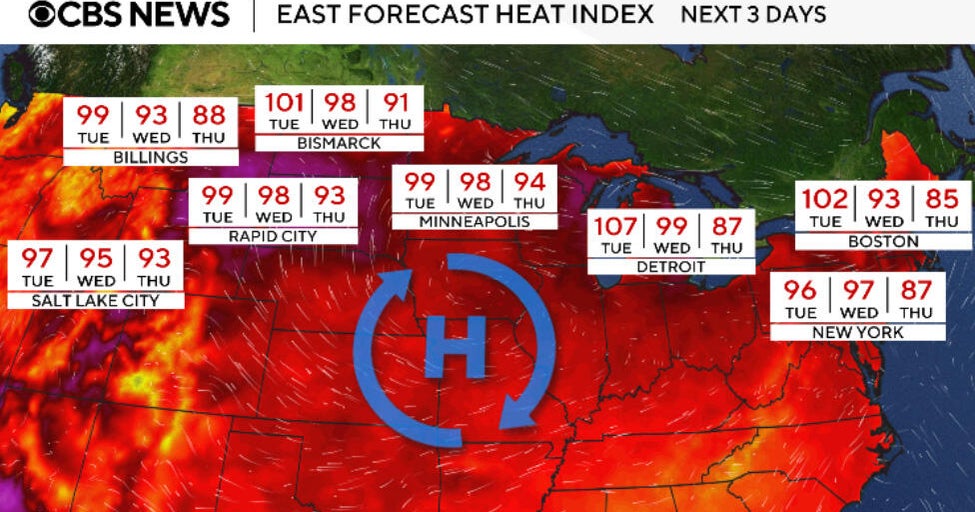
The United States is locked in an unprecedented struggle against Mother Nature this week, as a colossal "heat dome" holds roughly 100 million people hostage under a blanket of scorching, suffocating air. From the sun-baked deserts of the West to the bustling cities of the Northeast, record-shattering temperatures are not just a news headline – they're a crisis, sparking wildfires, endangering lives, and pushing infrastructure to its absolute limits.
But what exactly is this meteorological monster, and why is it turning the nation into a pressure cooker? WhyThisBuzz breaks down the science and the stark realities.
Understanding the Atmospheric Trap: What is a Heat Dome Phenomenon?
Forget your typical summer sizzle. A heat dome isn't just a hot day; it's a super-sized atmospheric anomaly. Imagine a giant, invisible lid placed over a vast region. This "lid" is formed when a persistent ridge of high pressure pushes hot air downwards, compressing it and trapping it close to the ground. As the air sinks, it heats up even more. Crucially, this high-pressure system also acts as a barrier, deflecting weather systems that could bring cooler air or rain, thus prolonging the intense heat.
Meteorologists describe this current event as "exceptionally rare" for mid-July, highlighting its unusual intensity and duration. Originating in the West, this heat dome has become a relentless force, refusing to budge and extending its fiery grip eastward.
How Does a Heat Dome Create Record-Breaking Temperatures?
When this atmospheric phenomenon sets up shop, the results are immediate and brutal. Temperatures across affected regions are soaring 20 to 30 degrees above average for this time of year. Consider this:
- Billings, Montana recently hit a staggering 111 degrees Fahrenheit, an all-time record.
- Salt Lake City, Utah likewise shattered its own record, reaching 109 degrees, a mark only seen a handful of times in over 60 years.
- The heat index – what it feels like – is hitting the high 90s to well over 100 degrees for days on end, offering little to no relief.
The peak for the Northern Tier is expected early this week, with the Northeast bracing for its hottest days midweek. This isn't just uncomfortable; it's a genuine threat to public health.
Beyond the Thermometer: Why Extreme Heat is So Dangerous
The relentless heat isn't just a matter of discomfort; it's a catalyst for a dangerous domino effect across the country.
Wildfires Ignited: The Heat Dome's Destructive Power
One of the most immediate and terrifying consequences of a prolonged heat dome is the dramatic increase in wildfire risk. Parched landscapes, fueled by consistent triple-digit temperatures and lack of moisture, become tinderboxes.
- In California, the Summit Fire in the Antelope Valley forced evacuations and consumed nearly 3,000 acres, threatening communities outside Los Angeles.
- Colorado is battling multiple blazes, including the Aspen Acres Fire, which has already destroyed over 850 structures. Two new fires recently sparked in the state's high country, underscoring the severity.
- The escalating crisis even prompted Colorado Senator John Hickenlooper to tour the damage, advocating for increased funding to battle these devastating blazes, citing "huge cuts to the fire service" as a critical issue.
Public Health Emergency: Why Heat Stress is a Silent Killer
Forecasters warn that these "extremely hot daytime highs combined with potentially record-warm lows" mean limited relief from the heat stress. This lack of overnight cooling is particularly dangerous, as the body doesn't get a chance to recover, significantly increasing the risk of heat-related illnesses, including potentially fatal heat stroke. Vulnerable populations – the elderly, children, and those with pre-existing conditions – are especially at risk.
Not Just the Heat: The Nation's Wild Weather Rollercoaster
While the heat dome dominates headlines, other parts of the US are grappling with their own extreme weather events, illustrating a broader pattern of climatic instability.
- In the South, heavy rain storms and flash flooding have turned streets into rivers. Louisiana saw New Orleans residents wading through knee-high water, while Missouri faced "historic" flash flooding, requiring rescue crews to airlift over 200 people stranded at a children's camp after 6 to 12 inches of rain fell.
- Meanwhile, the Philadelphia area was reeling from powerful microbursts – intense, localized downdrafts – with gusts up to 70 miles per hour, prompting Mayor Cherelle Parker to declare a Disaster Emergency.
This confluence of extreme events, from suffocating heat and wildfires to sudden deluges and destructive wind, paints a stark picture of a nation grappling with a highly volatile climate. The heat dome isn't just a weather event; it's a wake-up call about the escalating challenges of our changing world.


