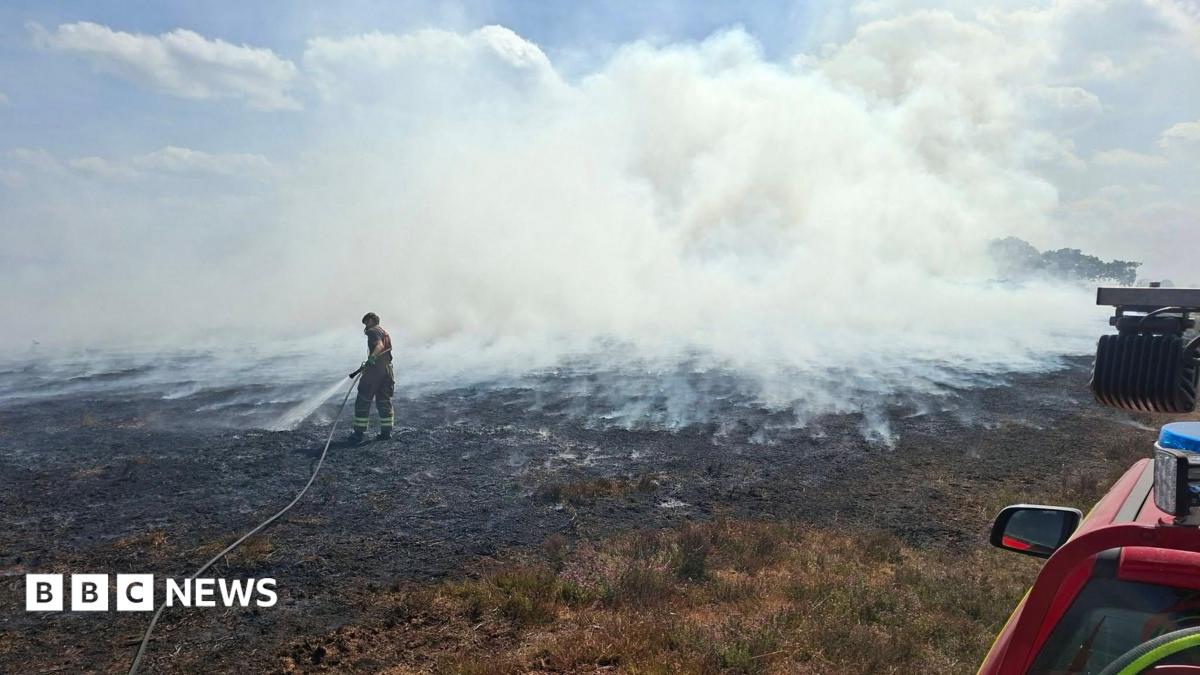
What started as a routine vehicle fire on a Sunday afternoon has transformed into a multi-day environmental and logistical crisis.
In Hampshire’s historic New Forest, a single van catching fire on the A31 dual carriageway has sparked an unpredictable wildfire that has now consumed over 1.6 square kilometers (400 acres) of heathland. Four days in, firefighters from across the region are still struggling to contain the blaze amidst a scorching heatwave.
But this isn’t just a story about a fire; it’s a stark demonstration of how vulnerable our infrastructure has become to the realities of a changing climate. Here is why the New Forest wildfire matters.
The Spark That Lit the Powder Keg
When the van caught fire on Sunday, the response had to be instant. The blaze escalated so rapidly that 23 drivers were forced to abandon their vehicles on the highway as smoke and flames overtook the tarmac.
Today, the A31 remains completely shut in both directions, choking regional transport. The heat was so intense that National Highways has reported significant structural damage to the road surface, safety barriers, and boundary fencing.
The immediate fallout is severe:
- Gridlock: Major diversion routes are heavily congested, crippling local travel.
- Economic Halt: Local landmarks, like the popular High Corner Inn, have been forced to shut down entirely due to safety concerns and road closures.
- Resource Strain: Nearby campsites, including the Red Shoot Camping Park, have issued emergency bans on charcoal and wood-burning BBQs, allowing only gas.
The "30-30-30" Threat: Is the UK Primed to Burn?
This crisis didn't happen in a vacuum. It follows England and Wales recording their driest July since records began in 1836, leaving the countryside essentially acting as a giant tinderbox.
As temperatures in Hampshire hover around 30°C, fire experts are closely watching a critical meteorological threshold known as the "30-30-30" wildfire rule. This rule highlights conditions that trigger extreme, uncontrollable wildfire behavior:
- Temperatures above 30°C.
- Humidity below 30%.
- Wind speeds above 30 km/h (18 mph).
While humidity levels in the New Forest are currently keeping us safe from the full brunt of this rule (sitting around 69%), the extreme dry heat alone is making the terrain incredibly difficult for crews to navigate.
[30-30-30 WILDFIRE RULE STATUS]
- Temperature: >30°C (MET) ✔️
- Humidity: <30% (Not Met - Currently 69%) ❌
- Wind: >30 km/h (Not Met - Currently 16 km/h) ❌
Even without meeting the full threshold, the parched heathland offers zero resistance to the creeping flames.
The Human & Environmental Cost
The battle to contain the fire is putting an unprecedented strain on local resources. Forestry England has described the fire as "unpredictable," warning that operations will likely last for several more days.
- Water Rationing: Local residents are being urged to drastically reduce their water usage to ensure emergency crews have enough pressure to combat the flames.
- Toxic Air: Smoke plumes are drifting across Hampshire. While official air quality monitoring stations (situated miles away) currently rate pollution as low, shifting winds are expected to push toxic smoke levels to "moderate" by mid-week. Health officials are advising vulnerable residents to stay indoors with windows firmly shut.
Why This Buzz Matters
For years, wildfires were viewed by Northern Europeans as a "Mediterranean problem"—something that happened in Greece, Spain, or California.
The New Forest blaze is a reality check. When a single vehicle fire can paralyze a major highway for a week, dry out local water reserves, and destroy hundreds of acres of protected national park, we have to acknowledge a new reality.
As summers grow hotter and drier, the margin for error shrinks. What used to be a standard roadside accident is now a catalyst for regional disaster. The question is no longer if the UK will face more extreme wildfires, but how prepared we are to fight them.


